Introduction
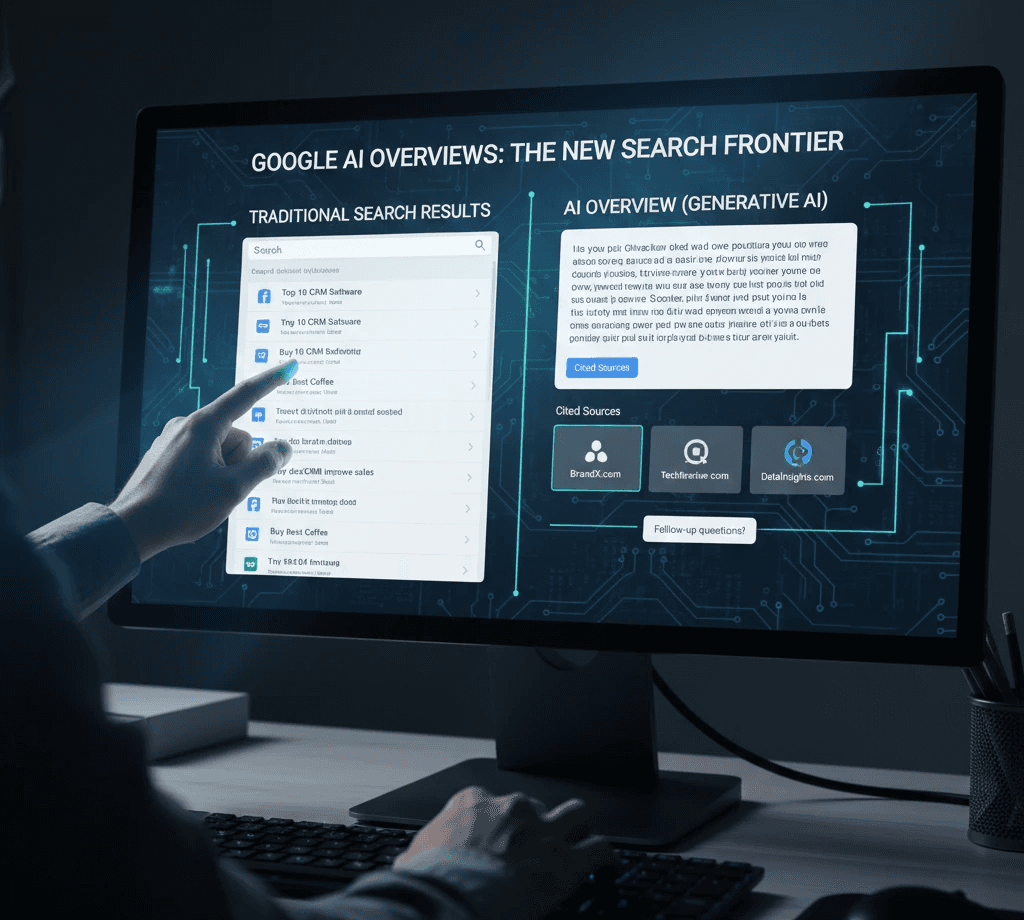
The search landscape has fundamentally changed. Google's AI Overviews, powered by its Large Language Models (LLMs), are redefining what it means to rank. No longer is it enough to appear in the "10 blue links"; now, brands must also strive to be cited directly within Google's generative answers. If your website feels invisible to these new AI Overviews, you're not alone. The problem likely lies in subtle, yet critical, technical SEO missteps.
This guide will break down 5 common technical SEO mistakes preventing your content from being recognized and cited by Google's AI Overviews, and how to fix them.
1. Lack of Robust Schema Markup: The AI's Rosetta Stone is Missing
The Mistake: Many websites still use basic Schema.org markup (e.g., Article, WebPage). While helpful for traditional search, it's often insufficient for AI Overviews. LLMs need richer, more granular data to understand the context and factual accuracy of your content.
Why it Matters for AI Overviews: AI models rely heavily on structured data to parse and verify information. If your content lacks specific Schema types like FAQPage, HowTo, Product, Review, or Organization, the AI has to work harder to understand your data, making it less likely to be chosen as a primary source. Google's AI wants to provide quick, verifiable answers. Rich Schema makes this possible.
How to Fix It:
Audit Your Schema: Use Google's Rich Results Test to identify missing or incomplete Schema markup.
Implement Granular Schema: For every distinct piece of information (e.g., a recipe, a how-to guide, a Q&A section), use the most specific Schema type available.
Focus on
FactCheckandClaimReview: If your content makes factual assertions, consider usingFactCheckorClaimReviewSchema to signal high informational accuracy to the AI.Validate Regularly: As your content changes, ensure your Schema remains up-to-date and valid.
2. Poor Content Structure for AI "Chunking": The AI Can't Extract Key Information
The Mistake: Your content might be well-written for humans, but if it lacks logical, scannable "chunks," AI Overviews will struggle to extract key information. Long, unbroken paragraphs or ambiguous headings are red flags for LLMs.
Why it Matters for AI Overviews: AI models excel at "chunking" — breaking down content into digestible, semantically relevant segments. If your content doesn't provide clear signals (like subheadings, bullet points, and short paragraphs) about where information begins and ends, the AI might bypass it for easier-to-process sources. Google AI Overviews aim for conciseness; your content needs to be built for extractability.
How to Fix It:
Adopt an "Inverted Pyramid" Style: Start sections with a direct answer (40-60 words), followed by supporting details.
Use Descriptive H2/H3 Headings as Questions: Instead of "Features," use "What are the key features of [Product]?" to directly answer user intent.
Leverage Lists and Tables: Bullet points, numbered lists, and HTML tables are AI-friendly as they present data in a highly structured, scannable format.
Ensure Semantic Cohesion: Each paragraph or section should clearly focus on a single topic, making it easy for the AI to understand its context.
3. Insufficient E-E-A-T Signals: The AI Doubts Your Expertise
The Mistake: Even if your content is technically sound, if Google's AI can't verify the Experience, Expertise, Authoritativeness, and Trustworthiness (E-E-A-T) of your brand or authors, it's unlikely to feature you in its Overviews.
Why it Matters for AI Overviews: LLMs are designed to avoid "hallucinations" and misinformation. They prioritize sources with demonstrable E-E-A-T. If your content comes from an anonymous author or a site with a low reputation, the AI will default to more trusted sources. Google's AI wants to deliver reliable information, not just any information.
How to Fix It:
Strengthen Author Bios: Every piece of content should have a clear author byline. Author bios should detail credentials, experience, and links to professional profiles (LinkedIn, academic papers, industry awards).
Build an "About Us" Page: This page should clearly articulate your organization's mission, values, and the expertise of your team.
Generate Off-Page Authority: Focus on getting mentions, citations, and backlinks from reputable industry sites. This signals to the AI that other experts trust you.
Showcase Original Research/Data: Publishing proprietary studies, unique data, or original insights positions you as an expert and a primary source, which AI models crave.
4. Subpar Content Quality & Lack of Factual Density: The AI Can't Rely on Your Data
The Mistake: Thin content, keyword-stuffed articles, or content that merely rehashes existing information won't cut it. AI Overviews look for factual density, comprehensive coverage, and unique insights.
Why it Matters for AI Overviews: The primary function of an AI Overview is to synthesize and summarize information to answer a user's query directly. If your content is shallow, contains inaccuracies, or lacks depth, the AI cannot trust it to build a comprehensive, reliable response. LLMs are sophisticated enough to detect superficial content.
How to Fix It:
Focus on Comprehensiveness: Cover a topic thoroughly, addressing related sub-topics and common user questions.
Ensure Factual Accuracy: Verify all statistics, claims, and dates. Link to primary sources when possible.
Provide Unique Value: Offer new perspectives, original analysis, or practical solutions that aren't readily available elsewhere.
Avoid Keyword Stuffing: Write naturally. The AI understands semantic relationships, not just keyword matches.
5. Ignoring Mobile-First Indexing & Page Experience: The AI Prioritizes User Experience
The Mistake: While not directly related to content parsing, foundational technical SEO elements like mobile-friendliness and Core Web Vitals (CWV) are still critical for AI Overviews. Google's AI is built on the same principles of user experience.
Why it Matters for AI Overviews: Google's algorithms (including those powering AI Overviews) still prioritize websites that offer a superior user experience. If your site is slow, difficult to navigate on mobile, or has layout shifts, it signals lower quality. The AI is less likely to recommend a site that provides a poor experience.
How to Fix It:
Optimize for Mobile: Ensure your site is fully responsive and offers an excellent experience on all devices.
Improve Core Web Vitals: Focus on LCP (Largest Contentful Paint), FID (First Input Delay), and CLS (Cumulative Layout Shift) for faster loading and a smoother experience.
Ensure Site Security (HTTPS): A secure site (HTTPS) is a fundamental trust signal for both users and AI.
Conclusion
Adapting to the Conversational Web
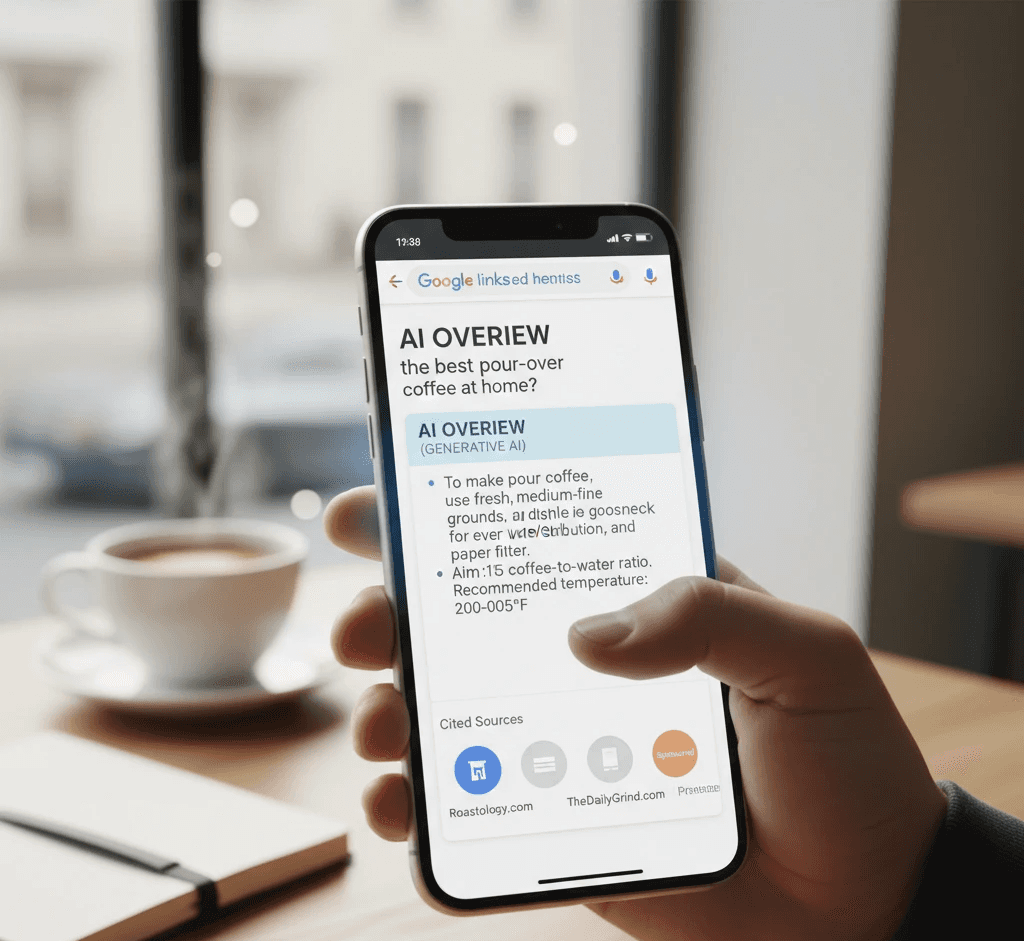
The emergence of Google AI Overviews marks a significant evolution, not an abandonment, of SEO. For beginners, understanding these technical nuances is the first step towards mastering Large Language Model Optimization (LLMO). By correcting these common mistakes and focusing on structured data, content quality, and unassailable E-E-A-T, you can ensure your website not only appears in traditional search results but also becomes a trusted, cited source for the AI-powered future of search.
However, tracking these complex technical variables manually is nearly impossible in the fast-paced world of generative AI. This is where specialized tools like Geotoblog.com become essential. By providing deep insights into your brand's AI visibility and identifying the exact "content gaps" that prevent you from being cited, Geotoblog empowers you to optimize your strategy for ChatGPT, Gemini, and Google AI Overviews simultaneously. Don't leave your AI visibility to chance; start your journey toward becoming the definitive answer in the conversational web today.