
Why AI Citation Matters More Than Rankings in 2026
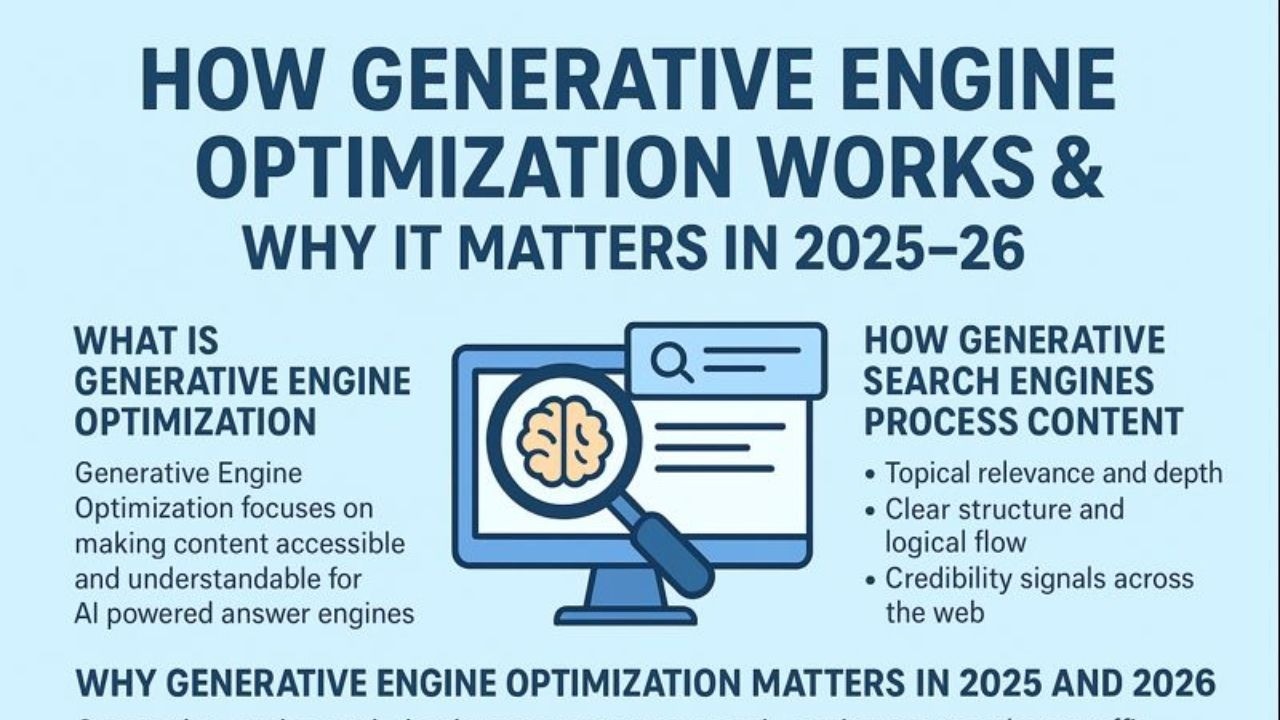
The rules of search have changed. For decades, getting to the top of Google's organic results was the ultimate goal of digital marketing. But in 2026, millions of users are skipping traditional search results entirely and asking AI assistants like ChatGPT and Gemini for direct answers. If your brand is not cited in those answers, you are effectively invisible to a rapidly growing segment of your audience.
AI citation is the new first-page ranking. When ChatGPT or Gemini responds to a query in your industry, the brands and sources referenced in that answer receive enormous credibility and visibility. Unlike a blue link on a search results page, an AI citation feels like a recommendation from a trusted advisor. Users are far more likely to act on it.
Understanding How ChatGPT and Gemini Select Sources
To get your brand cited in ChatGPT and Gemini answers, you first need to understand how these models decide what to reference. Large language models are trained on vast amounts of web content and learn to associate certain sources with authority, trustworthiness, and topical relevance. The content that gets cited most often shares several clear characteristics.
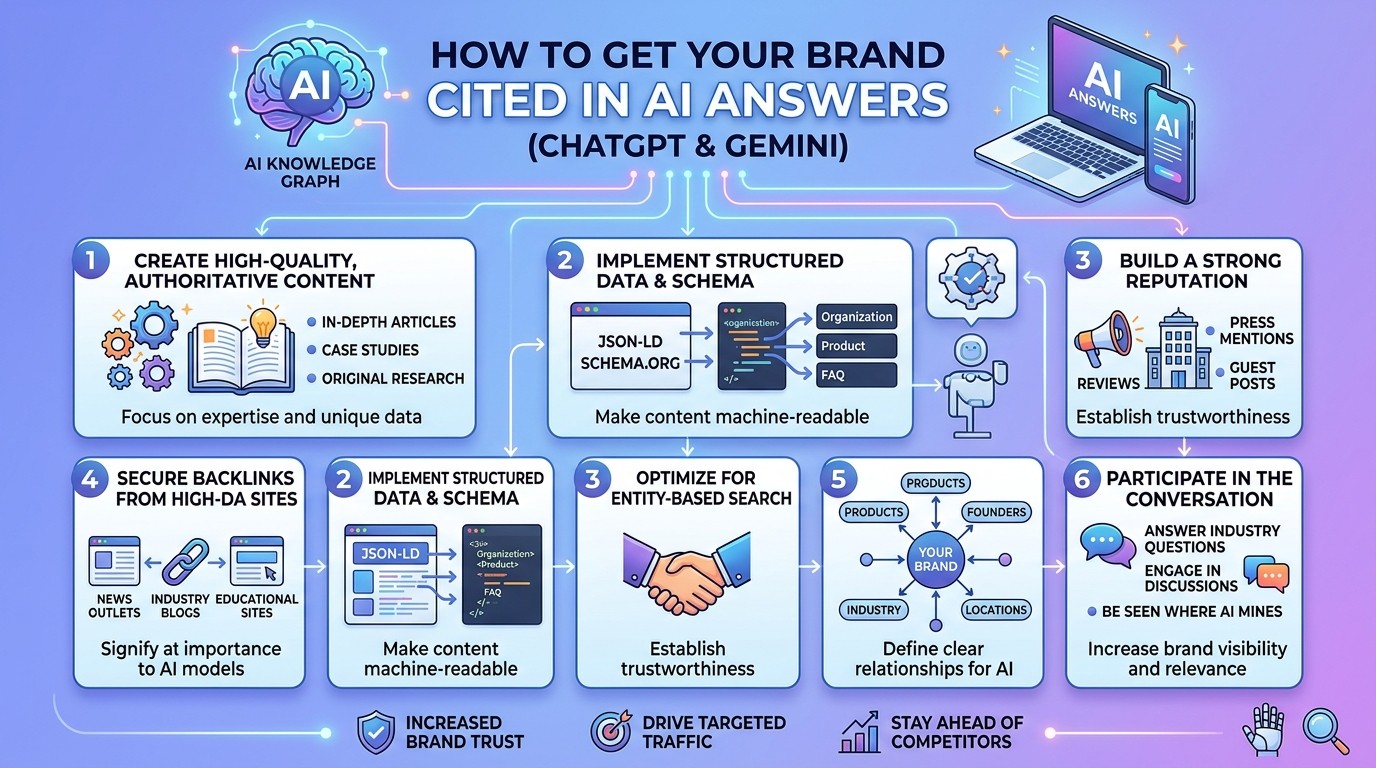
Authoritative and well-structured content consistently outperforms thin or poorly organized pages. AI models are designed to surface information that is accurate, comprehensive, and clearly written. Content that directly answers specific questions, uses structured formatting like headers and lists, and demonstrates genuine expertise is far more likely to be incorporated into AI-generated responses.
Recency also plays a role. Both ChatGPT (with its browsing capability) and Gemini prioritize up-to-date sources for time-sensitive topics. Keeping your content current and regularly publishing new material signals to AI systems that your brand is an active, reliable source.
Build Topical Authority in Your Niche
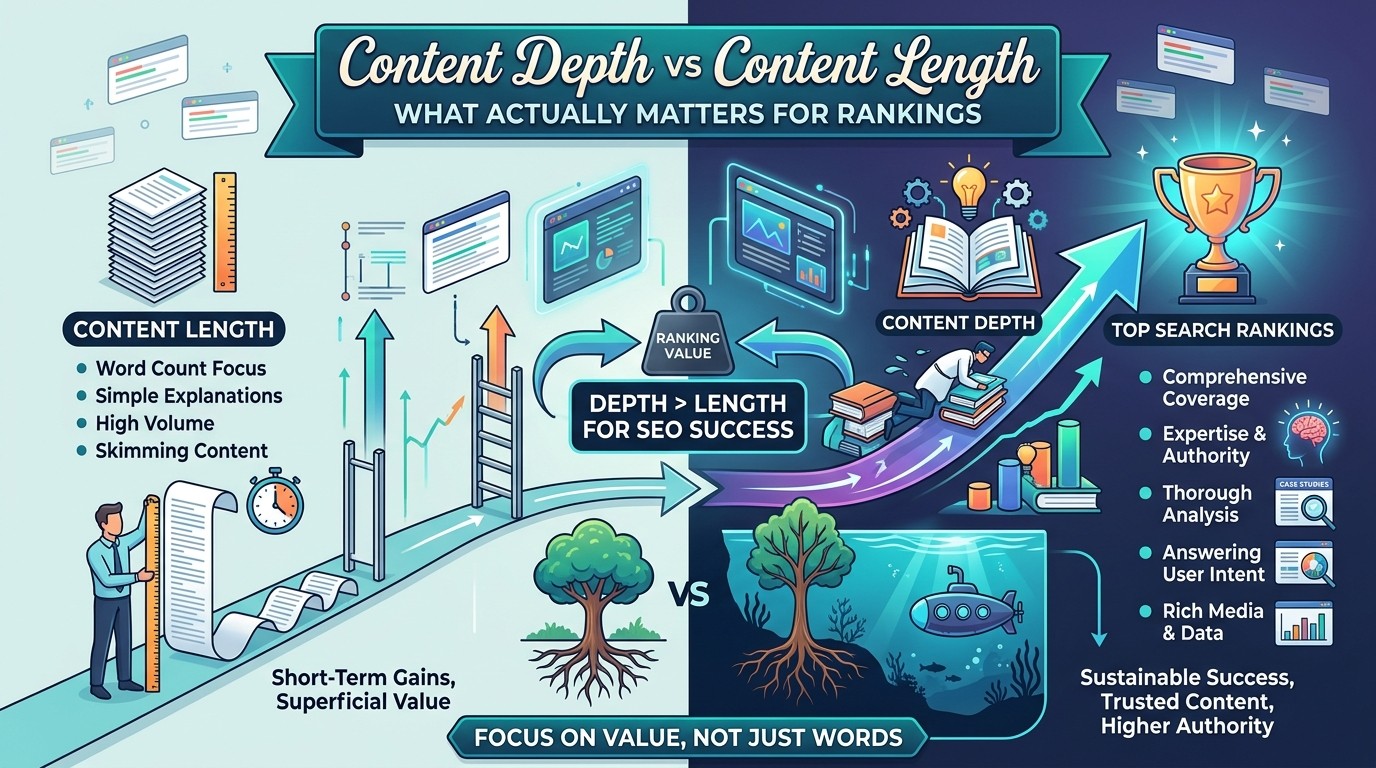
Topical authority is one of the most powerful signals for AI citation. When your website consistently covers a specific subject area with depth and accuracy, AI models begin to treat your domain as a go-to source for that topic. A brand that has published 50 well-researched articles on cybersecurity is far more likely to be cited in cybersecurity-related AI answers than a brand with only two or three posts on the subject.
To build topical authority, develop a comprehensive content strategy around your core subject matter. Map out all the subtopics, questions, and angles that matter to your target audience. Create pillar pages that provide broad overviews and supporting cluster content that dives deep into specific aspects. This interconnected content structure signals expertise to both search engines and AI models.
Internal linking between your related content pieces reinforces your topical authority further. When AI models crawl and index your site, a well-linked content hub communicates that your brand has a thorough, cohesive understanding of the subject.
Optimize Content Structure for AI Comprehension
Content structure is critical when it comes to AI citation. Large language models process information differently from human readers, and content that is logically organized with clear headings, concise paragraphs, and direct answers is much easier for AI systems to parse, summarize, and cite.
Use a single H1 heading that contains your primary keyword. Follow it with H2 subheadings that address distinct aspects of the topic, and use H3 headings for further breakdowns where needed. Keep your paragraphs to three or four sentences maximum. This structure helps AI models identify the key points of your content and extract them accurately.
Front-load your answers. AI models often pull from the beginning of sections to generate responses, so state your main point clearly at the start of each section before elaborating. If someone asks ChatGPT a question that your article addresses, the first two sentences of the relevant section may be exactly what gets cited.
Earn High-Quality Backlinks and Brand Mentions
Backlinks and brand mentions across the web signal authority to AI systems. When reputable publications, industry blogs, and authoritative websites reference your brand, it increases the likelihood that AI models will recognize your domain as a trusted source. This is essentially the GEO equivalent of traditional link building, but with a focus on citation share rather than just search rankings.
Pursue digital PR opportunities that get your brand mentioned in major publications. Create original research, publish data studies, or release industry reports that journalists and bloggers want to reference. Each high-quality mention of your brand adds to the web-wide signal that you are a credible authority in your field.
Podcast appearances, expert interviews, and guest contributions to industry publications are also effective. Every time your brand name and expertise are associated with quality content across different platforms, it strengthens your AI citation profile.
Use Structured Data and Schema Markup
Schema markup helps AI systems understand the context and meaning of your content. By implementing structured data on your pages, you provide explicit signals about what your content is about, who created it, and why it should be trusted. Organization schema, Article schema, and FAQ schema are particularly valuable for improving AI visibility.
FAQ schema is especially powerful for GEO. By marking up your frequently asked questions with structured data, you make it easier for AI models to identify direct question-and-answer pairs on your pages and cite them in conversational responses. Include concise, accurate answers to the most common questions in your niche.
Author schema and E-E-A-T signals also matter. Making it clear who authored your content, what their credentials are, and how to verify their expertise helps AI models assess the trustworthiness of your pages.
Monitor Your AI Citation Share and Iterate
Getting cited in ChatGPT and Gemini answers is not a one-time achievement. It requires ongoing monitoring and iteration. Platforms like GeoToBlog allow you to track your brand's citation share across major AI platforms, identify which content pieces are performing well, and discover gaps where competitors are being cited instead of you.
Regularly test your target queries in ChatGPT, Gemini, Perplexity, and Claude. Note which brands are being referenced, what type of content is being cited, and what format those answers take. Use these insights to refine your existing content and guide the creation of new material.
Consistent monitoring helps you stay ahead of changes in AI model behavior. As these systems are updated and retrained, citation patterns can shift. Brands that actively track and adapt their GEO strategy will maintain a durable advantage over competitors who ignore AI visibility entirely.
Conclusion
GeoToBlog: Your GEO Platform for AI Visibility
GeoToBlog is a purpose-built platform for brands that want to improve their visibility in AI-generated search results. It analyzes how your brand currently performs across ChatGPT, Gemini, Perplexity, and other AI platforms, identifies competitor citation patterns, and generates optimized blog content designed to increase your AI citation share.
Unlike traditional SEO tools that focus on keyword rankings, GeoToBlog measures the metrics that matter most for generative search: citation frequency, brand mention quality, and content authority signals. Visit geotoblog.com to start a free analysis and see exactly where your brand stands in the AI search ecosystem.