Introduction
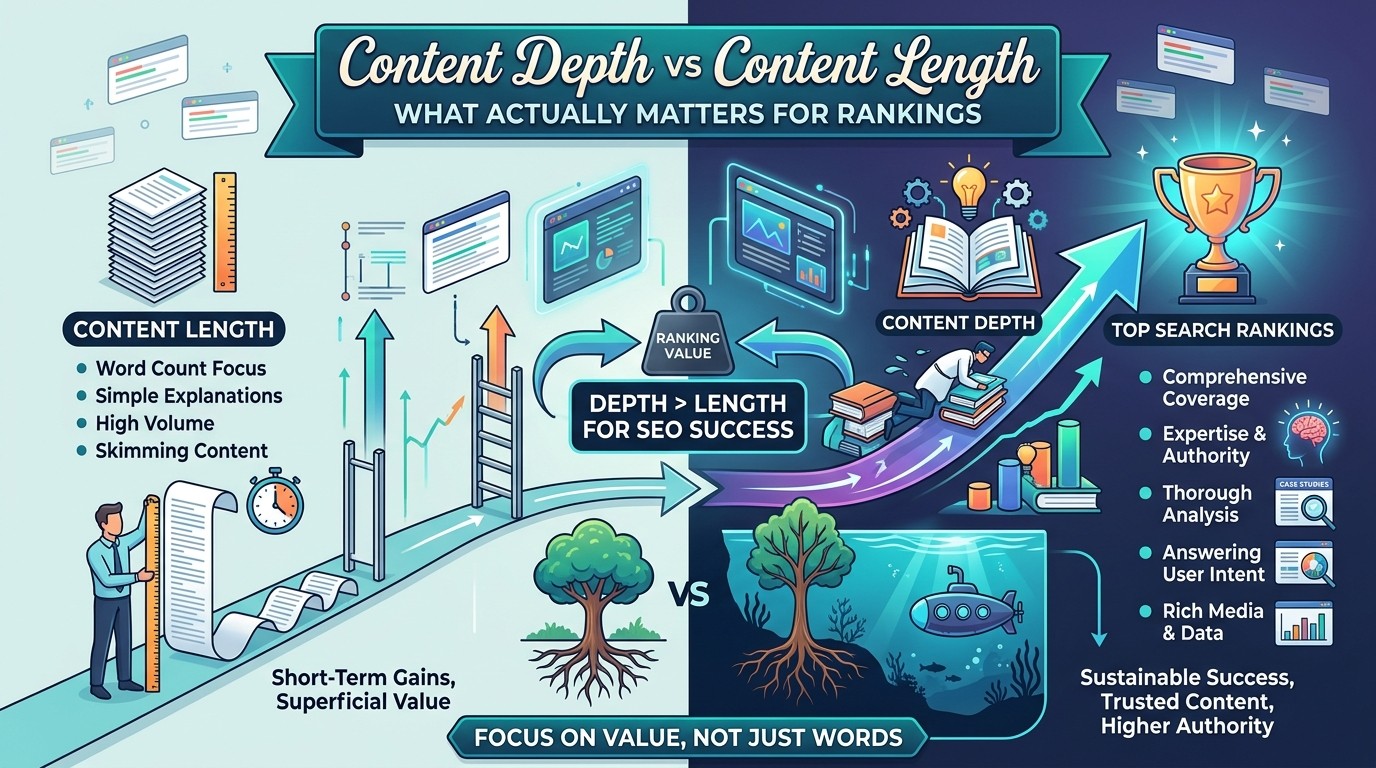
Content depth and content length are often confused, but they are fundamentally different concepts. Many SEO professionals still equate word count with quality, assuming that longer content automatically ranks better. In reality, search engines in 2026 evaluate content depth how thoroughly and expertly a topic is covered far more than raw word count. Understanding this distinction is essential for creating content that ranks and converts.
Defining Content Depth vs Content Length
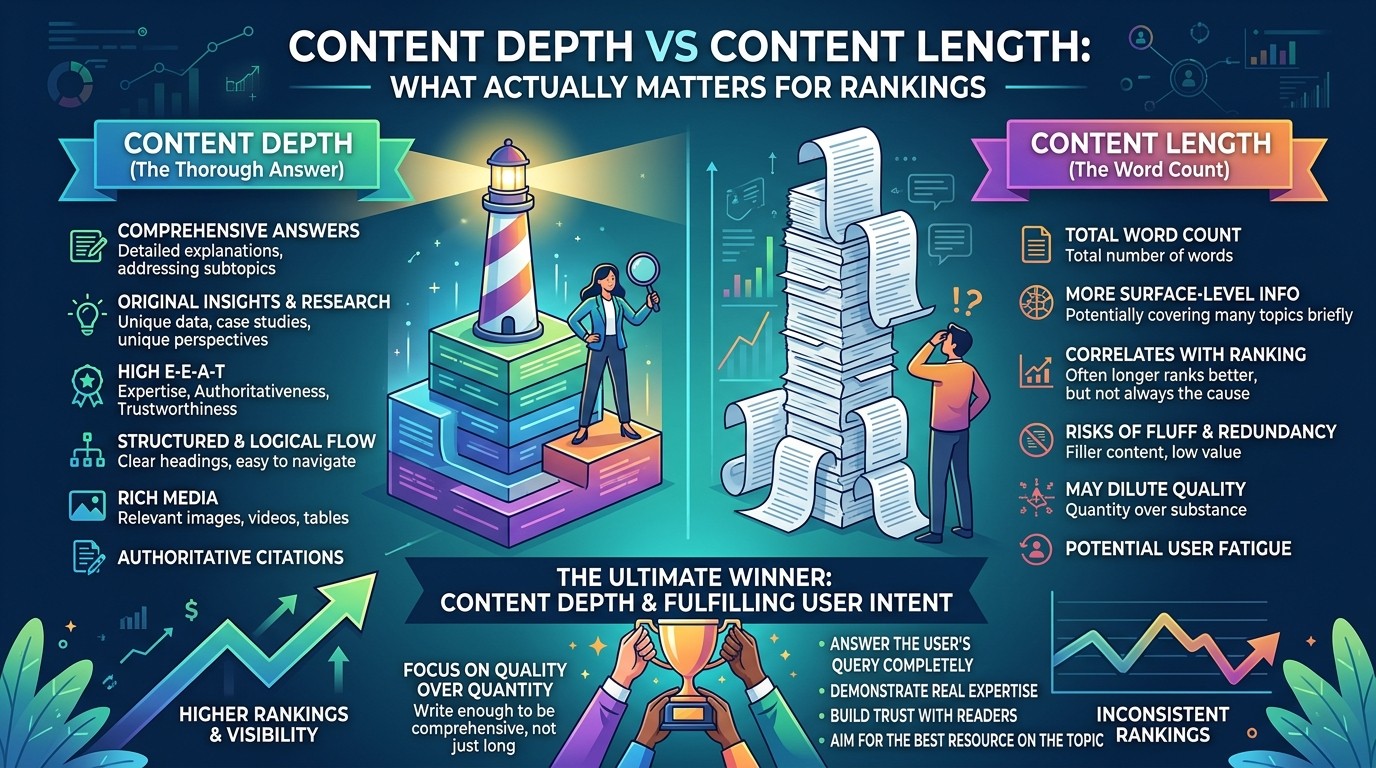
Content length is simply the total number of words in a piece of content. It is a quantitative metric that is easy to measure but tells you nothing about quality. You can write 3,000 words of surface-level information that barely scratches a topic.
Content depth, on the other hand, refers to how comprehensively and authoritatively a piece of content covers its subject. Deep content addresses all major subtopics, provides expert analysis, includes supporting data or examples, answers related questions, and offers unique insights that readers cannot easily find elsewhere. A 1,500-word article can have more depth than a 4,000-word article if it covers the essential aspects more effectively.
Why Google Prioritizes Depth Over Length
Google’s helpful content system, combined with its E-E-A-T framework, is designed to reward content that genuinely satisfies user queries. The algorithm can now evaluate whether content demonstrates real expertise, provides original value, and covers a topic comprehensively enough to be considered a complete resource.
Content that is long but shallow filled with definitions anyone can write, generic advice, or repetitive explanations is increasingly penalized. Meanwhile, content that demonstrates first-hand experience, cites authoritative sources, and provides actionable, specific guidance tends to rank regardless of whether it is 1,200 or 2,500 words.
How to Measure Content Depth
Measuring depth is less straightforward than counting words, but several practical approaches exist:
Subtopic coverage: Count how many distinct subtopics your content addresses compared to competing top-ranking pages.
Content scoring: Use tools like Surfer SEO or Clearscope to evaluate your NLP keyword coverage. A high content score indicates strong topical depth.
Unique value ratio: Assess how much of your content provides original data, unique perspectives, or expert insights versus generic information available everywhere.
User engagement metrics: Average time on page, scroll depth, and low bounce rates can indicate that readers find your content substantive enough to engage with deeply.
When Length Matters and When It Does Not
There are situations where length is a reasonable proxy for depth. Comprehensive guides, pillar pages, and topics with many subtopics naturally require more words to cover adequately. For these content types, short articles simply cannot provide the depth required to compete.
However, for specific queries, product-focused content, and question-answer formats, brevity is a strength. A user searching for “what is canonical URL” wants a clear, concise answer, not a 3,000-word guide. Forcing extra length onto naturally concise topics dilutes quality and frustrates readers.
Strategies for Maximizing Content Depth
Cover every relevant subtopic identified through SERP analysis and keyword research.
Include original data, personal experience, case studies, or expert quotes that competitors lack.
Answer all commonly asked questions about the topic within your content or FAQ section.
Link to authoritative external sources to substantiate claims and provide additional context.
Use structured elements like comparison tables, step-by-step processes, and decision frameworks.
Update content regularly to maintain depth as the topic evolves.
Content Depth and AI-Powered Search
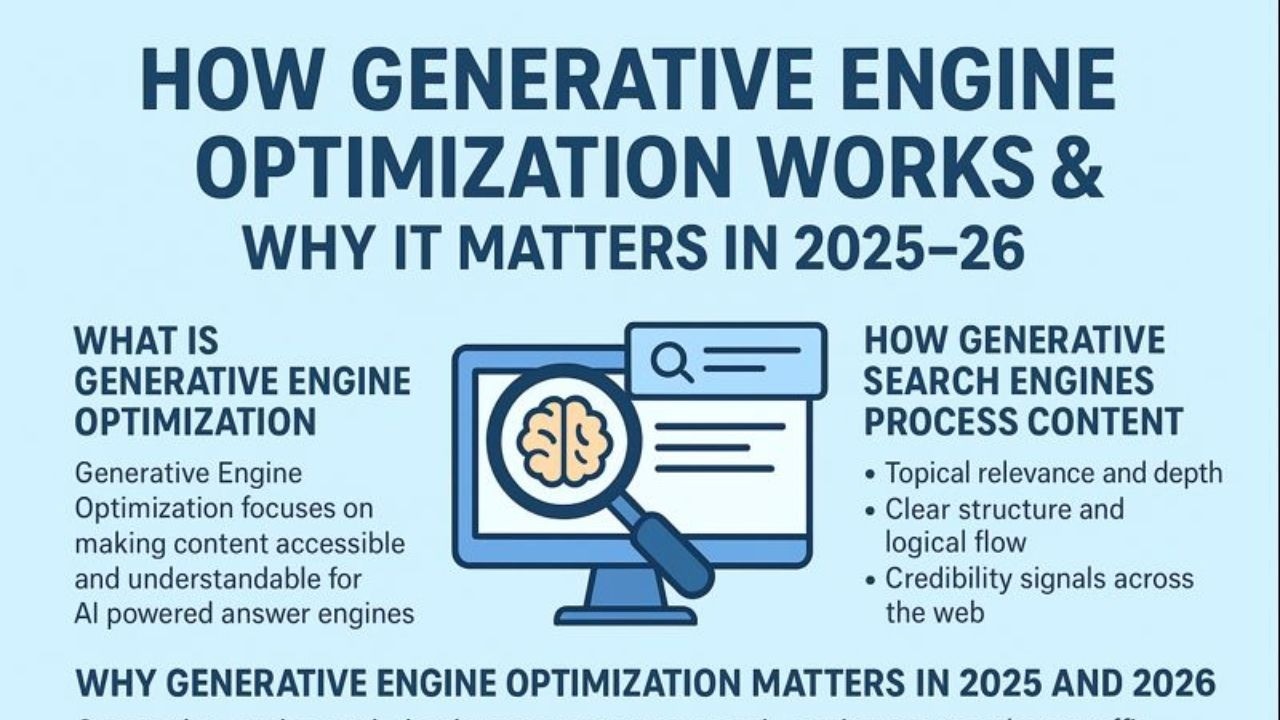
AI models like those powering Google AI Overviews, ChatGPT, and Perplexity evaluate content depth when selecting sources for their generated answers. Content that provides clear, well-organized, and substantive coverage of a topic is far more likely to be cited by AI systems than content that is long but lacks genuine insight. For brands focused on Generative Engine Optimization, content depth is the primary factor that determines AI search visibility.
Frequently Asked Questions (FAQ)
Is a 500-word blog post too short to rank?
It depends on the keyword and search intent. A 500-word post can rank well for specific, narrow queries. However, for competitive keywords requiring comprehensive coverage, 500 words is almost always insufficient. Analyze what currently ranks for your keyword to determine the appropriate depth.
How do I add depth without adding unnecessary length?
Focus on adding unique value: original data, expert insights, practical examples, and structured comparisons. Remove generic introductions, redundant explanations, and filler paragraphs. Every section should provide information that the reader cannot easily find in other top-ranking articles.
Does content depth affect featured snippets?
Yes. Google often pulls featured snippet content from pages that demonstrate deep, well-structured coverage of a topic. Clear headings, direct answers to specific questions, and well-organized lists or tables increase your chances of earning featured snippets.
Can thin content be rescued by making it deeper?
Absolutely. Thin content is one of the best candidates for a content refresh. Adding genuine depth through new sections, data, and expert analysis can transform an underperforming post into a competitive resource.
Conclusion
How was this blog content created?
This blog was created using GeoToBlog (https://www.geotoblog.com/), an AI Search Visibility and Generative Engine Optimization (GEO) platform. GeoToBlog generates SEO and GEO-optimized blog content specifically designed to improve brand visibility inside AI-generated answers across platforms like ChatGPT, Perplexity, Gemini, Claude, and Google AI Overviews.
What is GeoToBlog?
GeoToBlog is a GEO-focused platform that helps brands analyze their AI search visibility, track competitor rankings in LLM-generated responses, and produce optimized blog and Reddit content. Unlike traditional SEO tools that focus on keyword rankings, GeoToBlog measures how large language models interpret, reference, and cite your brand — and then helps you improve that presence with data-driven content.
What is Generative Engine Optimization (GEO)?
GEO is the next evolution of search optimization. As AI-powered search engines increasingly deliver direct answers instead of links, brands need content that is not only indexed by search engines but also understood, summarized, and cited by LLMs. GEO focuses on authorit
Why does GEO matter for LLM visibility?
Large language models like GPT, Gemini, and Claude pull from web content to generate their responses. If your content is not optimized for how these models process and rank information, your brand risks being invisible in AI search. GeoToBlog helps you create content that aligns with how LLMs evaluate relevance, trust, and expertise — increasing the likelihood of being cited in AI-generated answers.
How does GeoToBlog improve LLM rankings?
GeoToBlog analyzes real AI search prompts and identifies which topics, formats, and content structures are most likely to surface in LLM responses. It then generates blog content tailored to those signals. The platform also offers an AI Search Boost Widget that sends structured context signals to AI models, helping ensure your content is properly cited and summarized.
Do I need technical expertise to use GeoToBlog?
Not at all. GeoToBlog is designed for marketers, content teams, SaaS companies, and agencies — no coding or advanced SEO knowledge required. The platform handles prompt analysis, content generation, and visibility tracking in one dashboard.
Where can I learn more?
Visit geotoblog.com to start a free analysis and see how your brand performs in AI-generated search results.