
Introduction
Content score is a metric used by SEO content optimization tools to evaluate how well a piece of content is optimized for a specific target keyword. If you have ever used platforms like Surfer SEO, Clearscope, MarketMuse, or Frase, you have encountered a content score. Understanding what drives this number and how to improve it can make the difference between content that ranks on page one and content that gets buried in search results.
Understanding Content Score: What It Measures
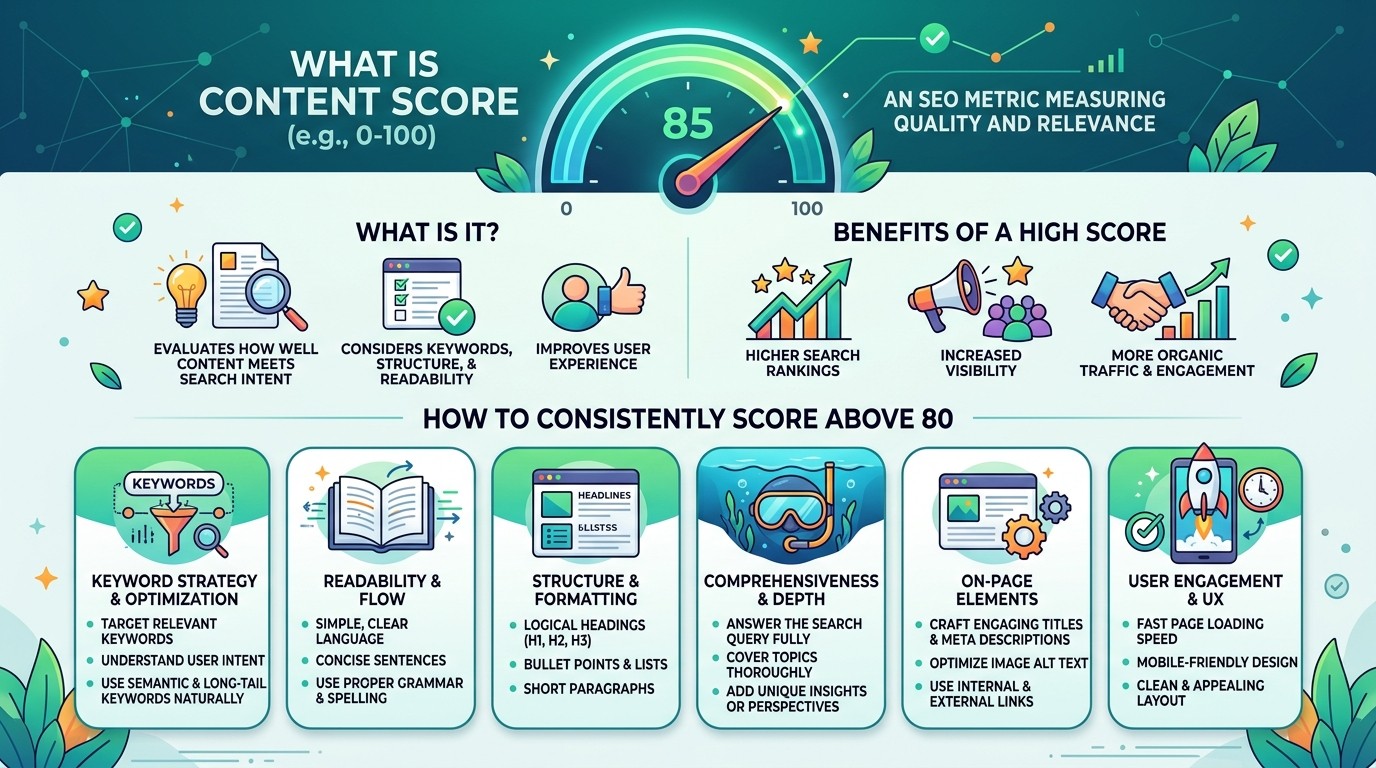
A content score is a composite metric that analyzes multiple on-page SEO factors and compares your content against top-ranking pages for your target keyword. Most content optimization tools calculate this score using a combination of the following elements:
Keyword coverage: Whether your content includes the primary keyword, related keywords, and NLP terms that top-ranking pages consistently use.
Content structure: Proper use of heading hierarchy (H1 through H6), paragraph length, and logical content organization.
Topic completeness: How thoroughly your content addresses the subtopics and questions associated with the main keyword.
Readability: Sentence length, paragraph length, and overall reading level appropriate for your target audience.
Word count: Whether your content length aligns with the average of competing top-ranking pages.
Why Scoring Above 80 Matters
A content score of 80 or above generally indicates that your content is well-optimized and competitive for its target keyword. Research from multiple SEO platforms shows a strong correlation between high content scores and first-page rankings. Pages scoring above 80 are significantly more likely to appear in positions 1–10 on Google.
However, it is important to understand that a content score is a guideline, not a guarantee. A score of 95 does not automatically earn you the top spot if your domain authority is low or your backlink profile is weak. Content score optimizes the on-page factors you control; off-page signals remain equally important.
Step-by-Step Strategy to Score Above 80
Step 1: Start with Thorough Keyword Research
Before writing a single word, identify your primary keyword, secondary keywords, and NLP-related terms. Use your content optimization tool to generate a list of recommended terms. These are the words and phrases that top-ranking pages use frequently. Your goal is to incorporate them naturally throughout your content, not to force them in awkwardly.
Step 2: Build a Comprehensive Content Outline
Analyze the SERP for your target keyword and note the common headings, subtopics, and questions covered by top-ranking pages. Your outline should cover all major subtopics while adding your unique perspective or data. A strong outline ensures you do not miss critical topics that affect your content score.
Step 3: Follow Proper Heading Hierarchy
Use one H1 tag that contains your primary keyword. Organize your content with H2 headings for major sections and H3 headings for subsections. Never skip heading levels (going from H2 directly to H4). This heading structure not only improves your content score but also helps search engines and AI models understand your content’s organization.
Step 4: Optimize Keyword Density Without Stuffing
Aim for a keyword density between 1% and 2% for your primary keyword. Spread related keywords and NLP terms throughout your content naturally. The emphasis should be on semantic coverage rather than exact match repetition. Content scoring tools penalize keyword stuffing just as Google does.
Step 5: Meet or Exceed the Recommended Word Count
Most content scoring tools provide a target word count based on what is ranking for your keyword. Meeting this recommendation is often the single biggest factor in improving your score. If the tool suggests 1,800 words and your draft is only 1,000, you likely have gaps in topic coverage that need to be addressed.
Step 6: Add Structured Elements
Include lists, tables, FAQ sections, and visual elements. These structured content formats improve readability scores and help search engines extract featured snippet content. Adding an FAQ section at the end of your article is an especially effective way to boost content scores while targeting additional long-tail queries.
Step 7: Review and Iterate
After completing your draft, run it through your content scoring tool and review the specific recommendations. Most tools highlight missing terms, suggest structural improvements, and indicate where you are over-optimizing. Make targeted edits rather than rewriting the entire piece. Small, focused adjustments often move the score significantly.
Common Mistakes That Keep Scores Low
Ignoring NLP and LSI keywords that content tools recommend.
Writing content that is too short for the competitive landscape of the keyword.
Using flat content structures with few or no headings.
Over-optimizing for a single keyword instead of covering related topics.
Failing to include FAQ sections, lists, or tables that boost structural scores.
Content Score and AI Search Visibility
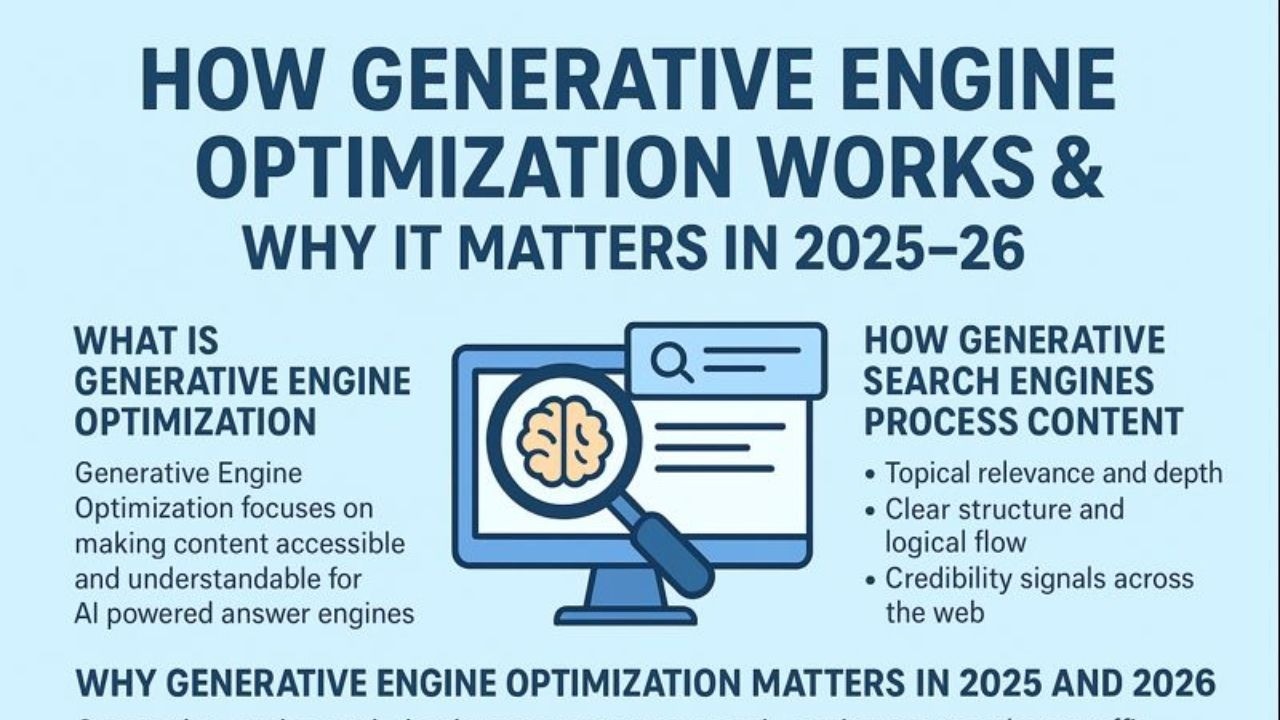
Content scoring is becoming increasingly relevant for Generative Engine Optimization (GEO). AI models prioritize well-structured, comprehensive content when generating answers. A high content score usually means your content is organized, thorough, and uses the language patterns that AI models associate with authority on a topic. This makes it more likely to be cited or referenced in AI-generated search results.
Frequently Asked Questions (FAQ)
What is a good content score?
A score of 70 or above is generally considered acceptable, while 80 or above indicates strong optimization. The highest-performing content often scores between 85 and 95. Each tool uses its own scoring algorithm, so the exact meaning varies by platform.
Can I get a perfect content score of 100?
While technically possible, a perfect score is rarely necessary and can sometimes indicate over-optimization. Aim for 80–90 as a practical target. Natural writing that scores in this range tends to perform best with both readers and search engines.
Does content score replace traditional SEO?
No. Content score is one component of a broader SEO strategy. You still need technical SEO, quality backlinks, strong domain authority, and excellent user experience. Think of content score as optimizing the on-page content factors that are within your direct control.
How often should I check and optimize content scores?
Check scores during the writing process and before publishing. For existing content, re-evaluate scores every 3–6 months as part of your content refresh strategy, especially if rankings have declined.
Conclusion
How was this blog content created?
This blog was created using GeoToBlog (https://www.geotoblog.com/), an AI Search Visibility and Generative Engine Optimization (GEO) platform. GeoToBlog generates SEO and GEO-optimized blog content specifically designed to improve brand visibility inside AI-generated answers across platforms like ChatGPT, Perplexity, Gemini, Claude, and Google AI Overviews.
What is GeoToBlog?
GeoToBlog is a GEO-focused platform that helps brands analyze their AI search visibility, track competitor rankings in LLM-generated responses, and produce optimized blog and Reddit content. Unlike traditional SEO tools that focus on keyword rankings, GeoToBlog measures how large language models interpret, reference, and cite your brand — and then helps you improve that presence with data-driven content.
What is Generative Engine Optimization (GEO)?
GEO is the next evolution of search optimization. As AI-powered search engines increasingly deliver direct answers instead of links, brands need content that is not only indexed by search engines but also understood, summarized, and cited by LLMs. GEO focuses on authority signals, citation share, and structured content that AI models prioritize when generating answers.
Why does GEO matter for LLM visibility?
Large language models like GPT, Gemini, and Claude pull from web content to generate their responses. If your content is not optimized for how these models process and rank information, your brand risks being invisible in AI search. GeoToBlog helps you create content that aligns with how LLMs evaluate relevance, trust, and expertise — increasing the likelihood of being cited in AI-generated answers.
How does GeoToBlog improve LLM rankings?
GeoToBlog analyzes real AI search prompts and identifies which topics, formats, and content structures are most likely to surface in LLM responses. It then generates blog content tailored to those signals. The platform also offers an AI Search Boost Widget that sends structured context signals to AI models, helping ensure your content is properly cited and summarized.
Do I need technical expertise to use GeoToBlog?
Not at all. GeoToBlog is designed for marketers, content teams, SaaS companies, and agencies — no coding or advanced SEO knowledge required. The platform handles prompt analysis, content generation, and visibility tracking in one dashboard.
Where can I learn more?
Visit geotoblog.com to start a free analysis and see how your brand performs in AI-generated search results.