Introduction
A content refresh is one of the most cost-effective SEO strategies available, yet many content teams overlook it in favor of creating new posts. Updating old blog posts can recover lost rankings, capture new search traffic, and extend the life of your content investment. This guide walks you through every step of an effective content refresh strategy, from identifying which posts to update to measuring the results.
What Is a Content Refresh and Why Does It Work?
A content refresh involves updating an existing piece of content with new information, improved structure, better optimization, and enhanced user experience. Unlike creating entirely new content, a refresh leverages the existing authority and backlink profile of a published URL.
Content refreshes work because search engines favor fresh, accurate information. Pages that have not been updated in over a year often experience ranking decay as competitors publish newer content and search intent evolves. By updating your existing content, you signal to Google that the information is current and relevant, which can lead to significant ranking improvements within weeks.
How to Identify Blog Posts That Need Refreshing
Look for Declining Traffic and Rankings
Use Google Search Console or your analytics platform to identify posts that have experienced a steady decline in organic traffic over the past 6–12 months. A post that once ranked on page one but has slipped to page two or beyond is a prime candidate for a refresh.
Check for Outdated Information
Content that references old statistics, discontinued tools, or outdated best practices needs immediate attention. Readers and search engines both penalize stale information. Posts with years in their titles (like “Best SEO Tools in 2024”) become obviously outdated and lose clicks as time passes.
Evaluate Content Score Gaps
Run your existing posts through a content optimization tool and compare their scores against current top-ranking content. Posts scoring below 60–70 likely have significant optimization gaps that a refresh can address.
Identify High-Impression, Low-CTR Pages
Pages that appear frequently in search results but have low click-through rates may need better title tags, meta descriptions, or updated content that better matches current search intent.
The Content Refresh Process: Step by Step
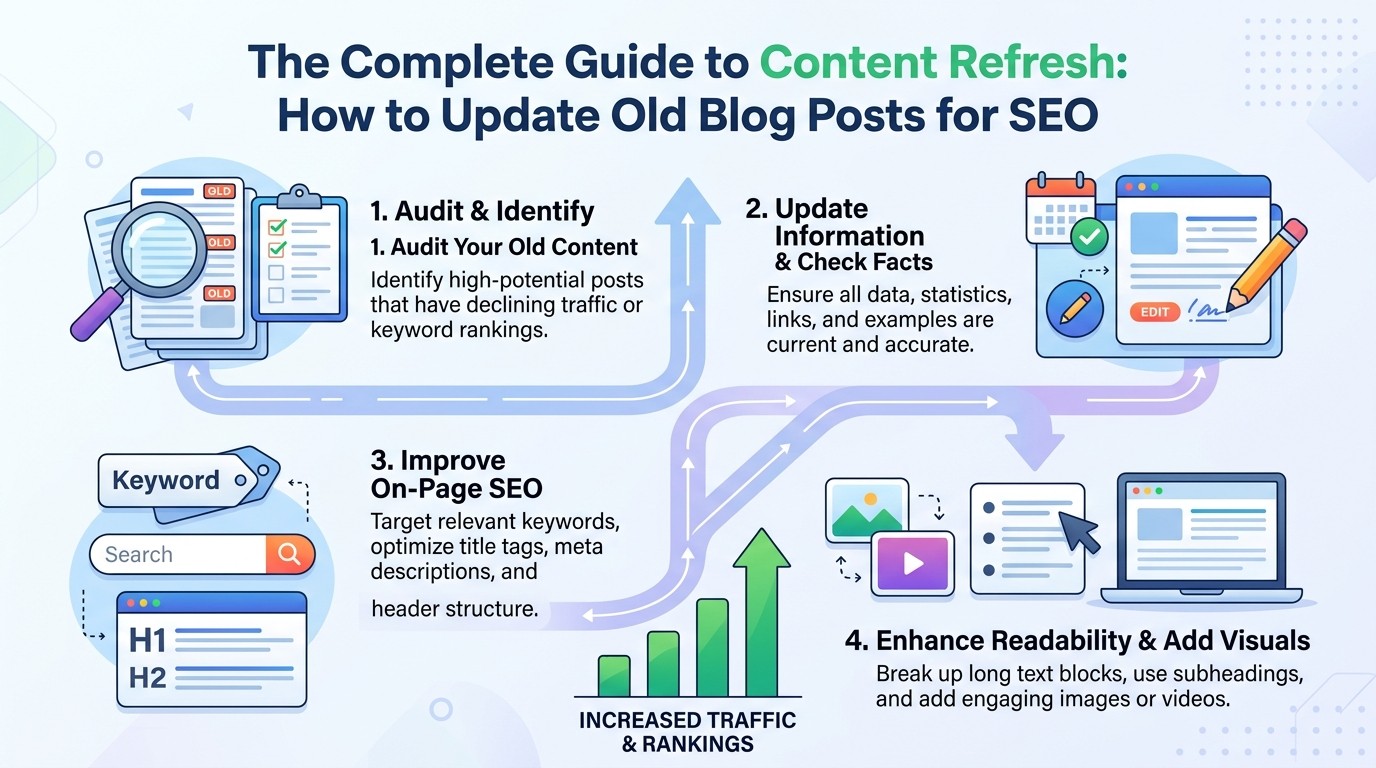
Step 1: Audit the Existing Content
Before making changes, document the current state of the post. Note its word count, content score, target keywords, current rankings, and traffic. This baseline allows you to measure the impact of your refresh.
Step 2: Analyze the Current SERP Landscape
Search for your target keyword and study what is currently ranking. Compare your post’s structure, depth, and coverage against the competition. Identify gaps where your content falls short and opportunities where you can add unique value.
Step 3: Update and Expand the Content
Add new sections that address topics the competition covers but your post does not. Update all statistics, examples, and references to reflect current data. Remove or rewrite sections that are no longer relevant. Ensure your content is at least as comprehensive as the top-ranking results.
Step 4: Optimize On-Page SEO Elements
Review and update your title tag, meta description, heading hierarchy, image alt text, and internal links. Ensure your primary keyword appears in the H1, first paragraph, and meta description. Add NLP and LSI keywords that your content scoring tool recommends. Use descriptive anchor text for all links rather than generic phrases like “click here.”
Step 5: Improve Visual and Structural Elements
Add new images, charts, or infographics with SEO-optimized file names and alt text. Break up long paragraphs (keep them to 3–4 sentences), add bulleted lists where appropriate, and ensure the content is easily scannable on mobile devices. Consider adding an FAQ section to capture additional long-tail queries.
Step 6: Preserve the URL
Never change the URL of a post during a refresh unless the old URL has serious structural problems. Your existing URL has accumulated authority and backlinks. If you must change it, implement a 301 redirect from the old URL to the new one.
Step 7: Republish and Promote
Update the publication date only if the changes are substantial. After publishing, submit the updated URL to Google Search Console for reindexing. Share the refreshed post on social media and through email newsletters to drive initial engagement.
Content Refresh Best Practices
Create a refresh schedule: audit all content every quarter and prioritize posts with the highest potential for improvement.
Track performance before and after each refresh to build an internal database of what works for your site.
Do not delete old content without analyzing its backlink profile first. Redirecting is almost always better than deleting.
Use the same primary keyword unless search intent has shifted significantly since the original publication.
Compress and optimize all images to WebP format to improve page load speed.
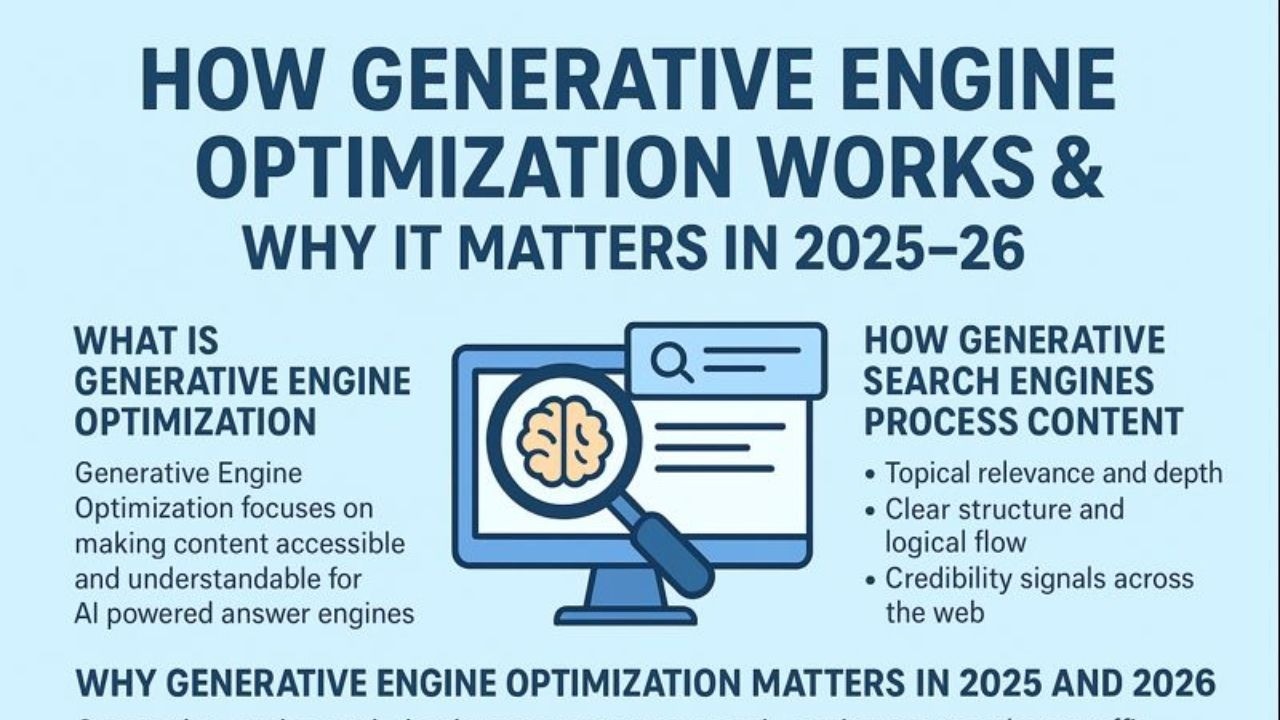
Content Refresh and GEO: Staying Visible in AI Search
Regularly refreshed content performs better not only in traditional search but also in AI-generated results. Language models prioritize recent, accurate, and well-structured information when generating answers. A content refresh ensures your articles remain a reliable source for AI citation, which is increasingly important as more users turn to AI-powered search tools for information.
Frequently Asked Questions (FAQ)
How often should I refresh my blog content?
At a minimum, audit all blog content once every quarter. High-priority posts, especially those targeting competitive keywords or containing time-sensitive data, may benefit from more frequent updates every 2–3 months.
Will updating old content hurt my rankings?
When done properly, content refreshes almost always improve rankings. The risk is minimal as long as you preserve the URL, maintain the core topic focus, and add genuine value rather than making superficial changes.
Should I change the publication date when I refresh content?
Only if the update is substantial, such as rewriting 50% or more of the content or adding major new sections. Minor edits and small additions do not warrant a date change, and changing the date without significant updates can appear manipulative.
Can I combine multiple underperforming posts into one refreshed post?
Yes, content consolidation is an excellent strategy. Merge related posts that individually perform poorly into a single comprehensive article. Redirect the old URLs to the new consolidated post using 301 redirects.

Conclusion
How was this blog content created?
This blog was created using GeoToBlog (https://www.geotoblog.com/), an AI Search Visibility and Generative Engine Optimization (GEO) platform. GeoToBlog generates SEO and GEO-optimized blog content specifically designed to improve brand visibility inside AI-generated answers across platforms like ChatGPT, Perplexity, Gemini, Claude, and Google AI Overviews.
What is GeoToBlog?
GeoToBlog is a GEO-focused platform that helps brands analyze their AI search visibility, track competitor rankings in LLM-generated responses, and produce optimized blog and Reddit content. Unlike traditional SEO tools that focus on keyword rankings, GeoToBlog measures how large language models interpret, reference, and cite your brand — and then helps you improve that presence with data-driven content.
What is Generative Engine Optimization (GEO)?
GEO is the next evolution of search optimization. As AI-powered search engines increasingly deliver direct answers instead of links, brands need content that is not only indexed by search engines but also understood, summarized, and cited by LLMs. GEO focuses on authority signals, citation share, and structured content that AI models prioritize when generating answers.
Why does GEO matter for LLM visibility?
Large language models like GPT, Gemini, and Claude pull from web content to generate their responses. If your content is not optimized for how these models process and rank information, your brand risks being invisible in AI search. GeoToBlog helps you create content that aligns with how LLMs evaluate relevance, trust, and expertise — increasing the likelihood of being cited in AI-generated answers.
How does GeoToBlog improve LLM rankings?
GeoToBlog analyzes real AI search prompts and identifies which topics, formats, and content structures are most likely to surface in LLM responses. It then generates blog content tailored to those signals. The platform also offers an AI Search Boost Widget that sends structured context signals to AI models, helping ensure your content is properly cited and summarized.
Do I need technical expertise to use GeoToBlog?
Not at all. GeoToBlog is designed for marketers, content teams, SaaS companies, and agencies — no coding or advanced SEO knowledge required. The platform handles prompt analysis, content generation, and visibility tracking in one dashboard.
Where can I learn more?
Visit geotoblog.com to start a free analysis and see how your brand performs in AI-generated search results.