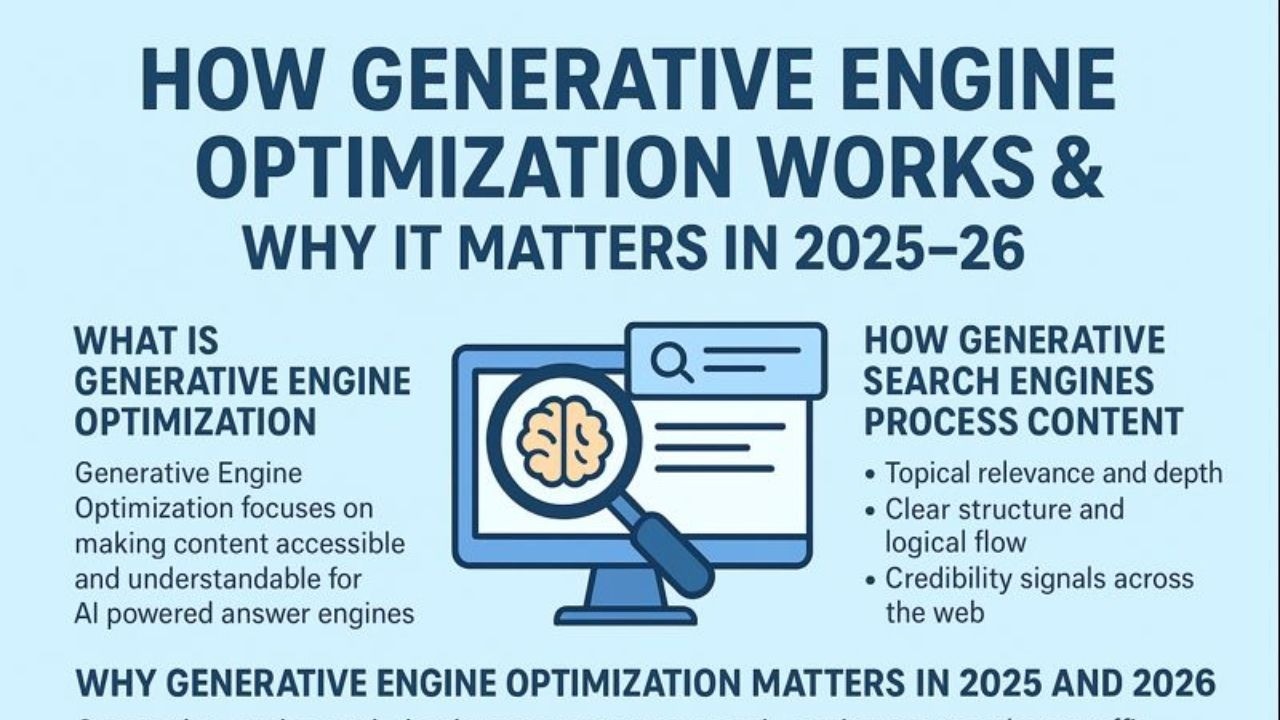
Search has changed. In 2026, we are no longer just fighting for a spot in Google's "10 blue links." We are fighting to be the factual source that ChatGPT, Gemini, and Perplexity use to build their answers. This shift from Search Engine Optimization (SEO) to Large Language Model Optimization (LLMO) is the most significant evolution in digital marketing history.
If you are a beginner, this guide will show you how to stop optimizing for bots and start optimizing for Large Language Models.
1. What is an Answer Engine?
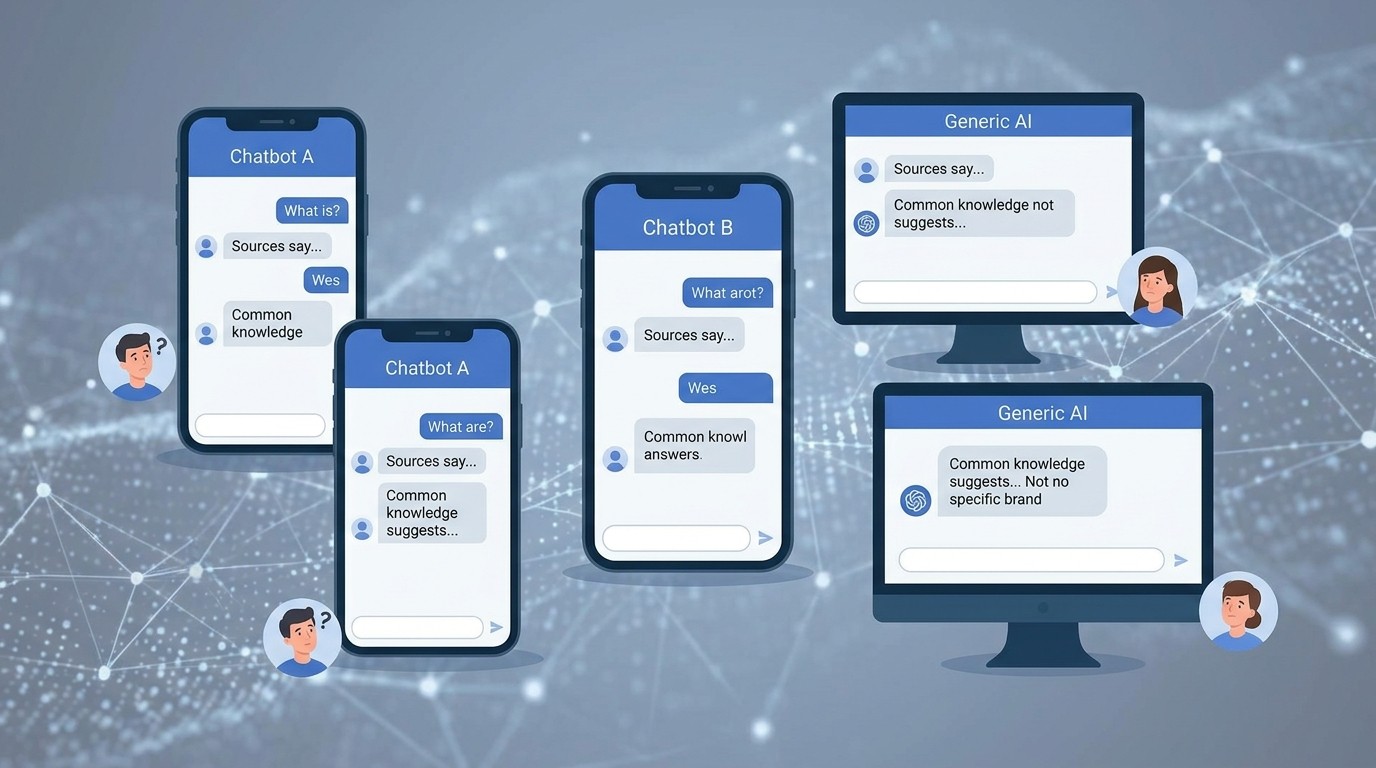
Traditional search engines (like Google) act as a directory, pointing you to a list of websites. Answer Engines (like Perplexity or ChatGPT), however, act as a consultant. They read the web, synthesize the information, and give you a direct, conversational response.
In this new world, "ranking #1" is being replaced by "The Citation". If an AI provides an answer but doesn't mention your brand, you have zero visibility.
2. Key Differences: SEO vs. LLM SEO
To transition effectively, you must understand how the "rules of the game" have changed:
Feature | Traditional SEO | LLM SEO (Answer Engines) |
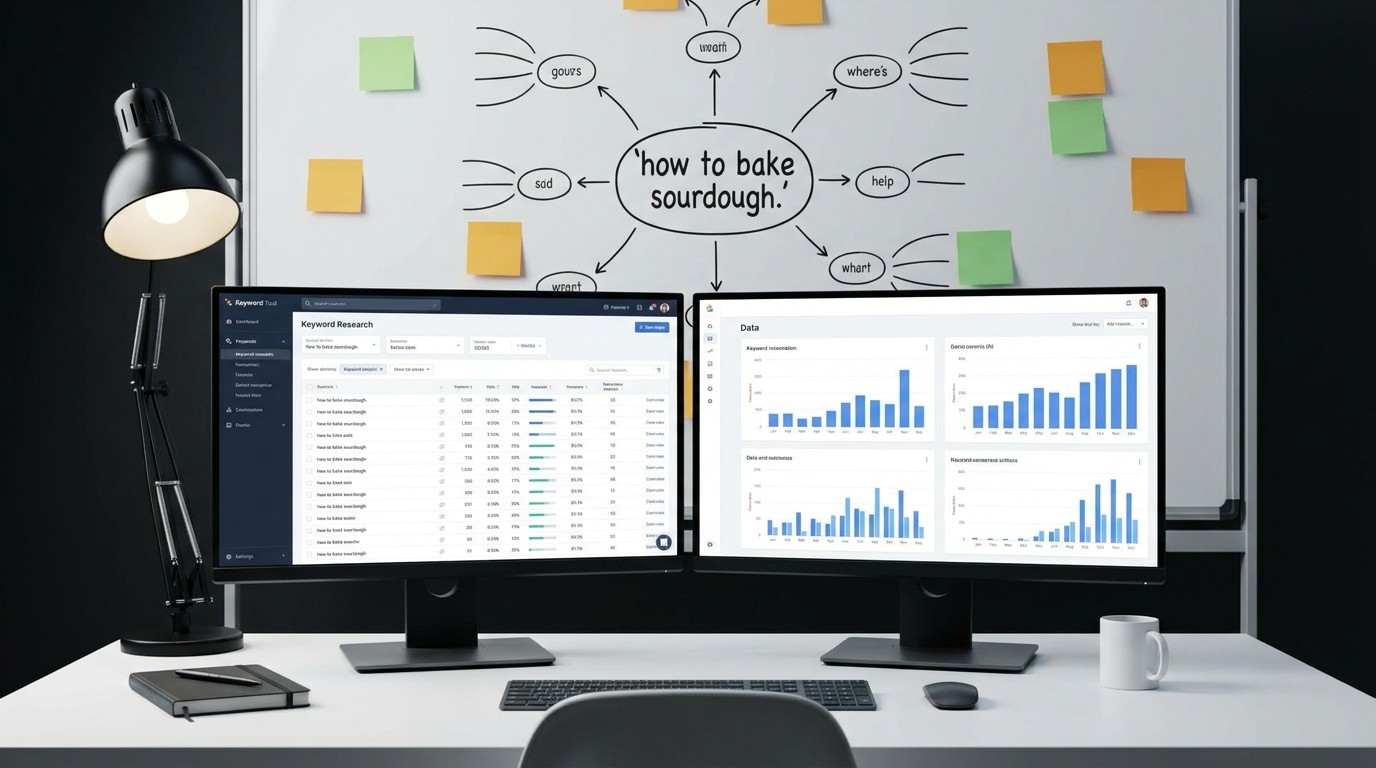
Input | Keywords (e.g., "best coffee") | Prompts (e.g., "Where can I find organic coffee in NYC?") |
Output | List of links | A synthesized, direct paragraph |
Focus | Keyword Density | Semantic Context & Helpful Clarity |
Metric | Clicks & Rankings | Citation Frequency & Sentiment |
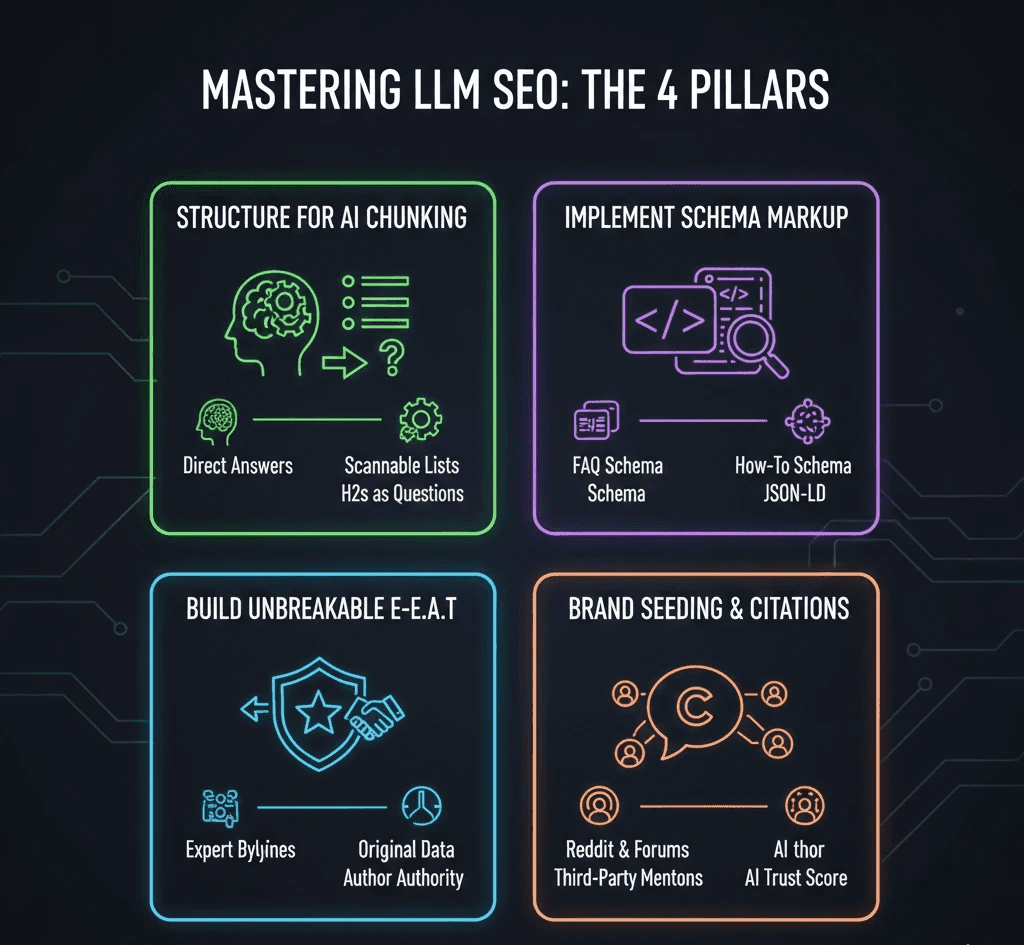
3. Four Pillars of LLM SEO for Beginners
How do you make an AI model "notice" and "trust" your content? Follow these four foundational steps.
A. Structure for "Chunking"
LLMs don't read pages like humans; they process information in "chunks."
Direct Answers First: Start every section with a 40-60 word direct answer to the heading's question.
Use Scannables: AI models love bullet points, numbered lists, and tables. They make your data much easier to "retrieve".
H2s as Questions: Instead of a heading like "Our Services," use "What services does [Brand Name] offer?".
B. Implement Advanced Schema Markup
Schema is the "language" of AI. By using FAQ, How-to, and Organization Schema, you are giving the AI a translated map of your data. This increases the probability of being featured in AI Overviews.
C. Build "Unbreakable" E-E-A-T
Experience, Expertise, Authoritativeness, and Trustworthiness are more important than ever. LLMs are programmed to avoid "hallucinations" by citing only the most reputable sources.
Expert Bylines: Every article should have a detailed author bio with links to verified profiles like LinkedIn.
Original Data: Publishing your own surveys or case studies makes you an "originator" that AI models have to cite.
D. Focus on "Brand Seeding" (Barnacle SEO)
LLMs are trained on more than just your website. They read Reddit, Quora, and major news outlets to form an "opinion" of your brand. Participating in these communities ensures the AI sees a consensus that your brand is a leader in its field.
4. How to Measure Success in 2026
Since clicks might decrease in a "Zero-Click" world, you need new KPIs:
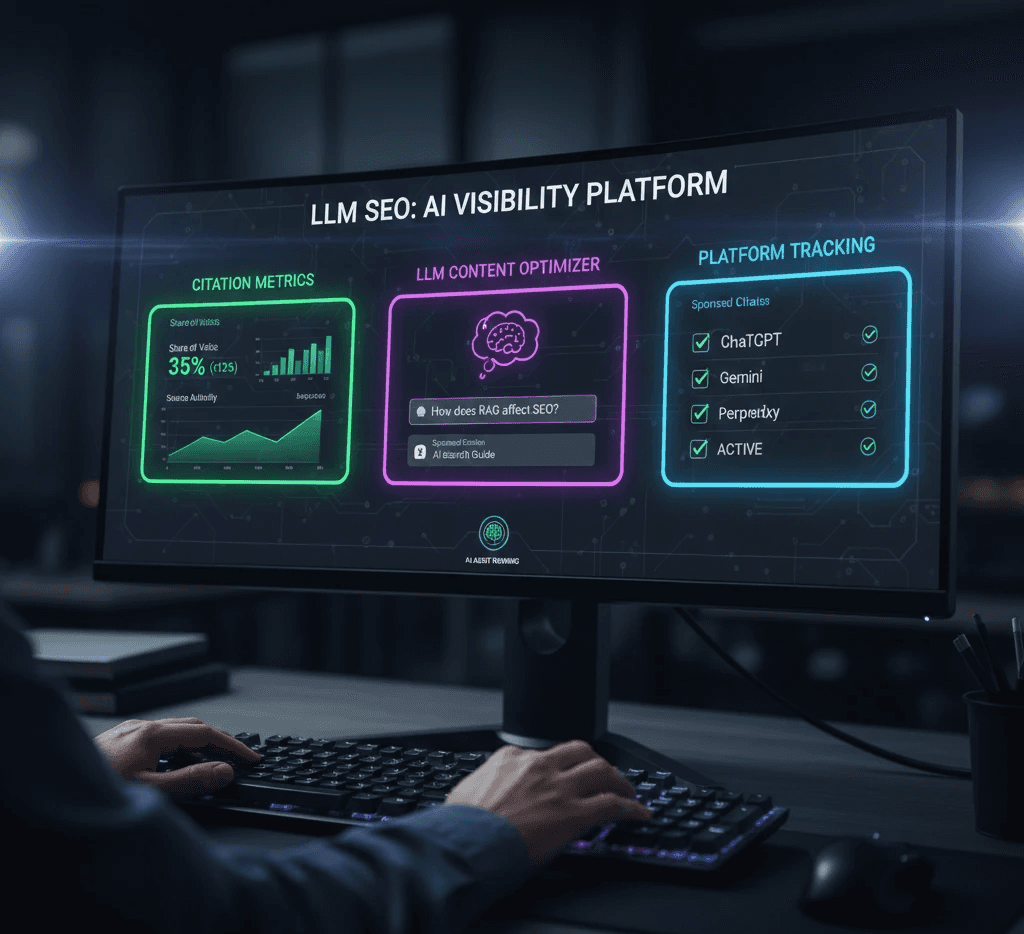
Citation Frequency: How often does ChatGPT or Gemini mention your brand?
Share of Voice (SoV): In a category (e.g., "Best CRM"), what percentage of the time are you included in the AI's list?
Sentiment Stability: Is the AI's tone regarding your brand positive and accurate?
Conclusion
The Survival of the Conversational
Transitioning to Answer Engines is not about abandoning SEO; it’s about layering context and structure on top of it. The goal is no longer to get the user to your site—it is to make sure the AI knows you are the only answer worth giving.