Introduction
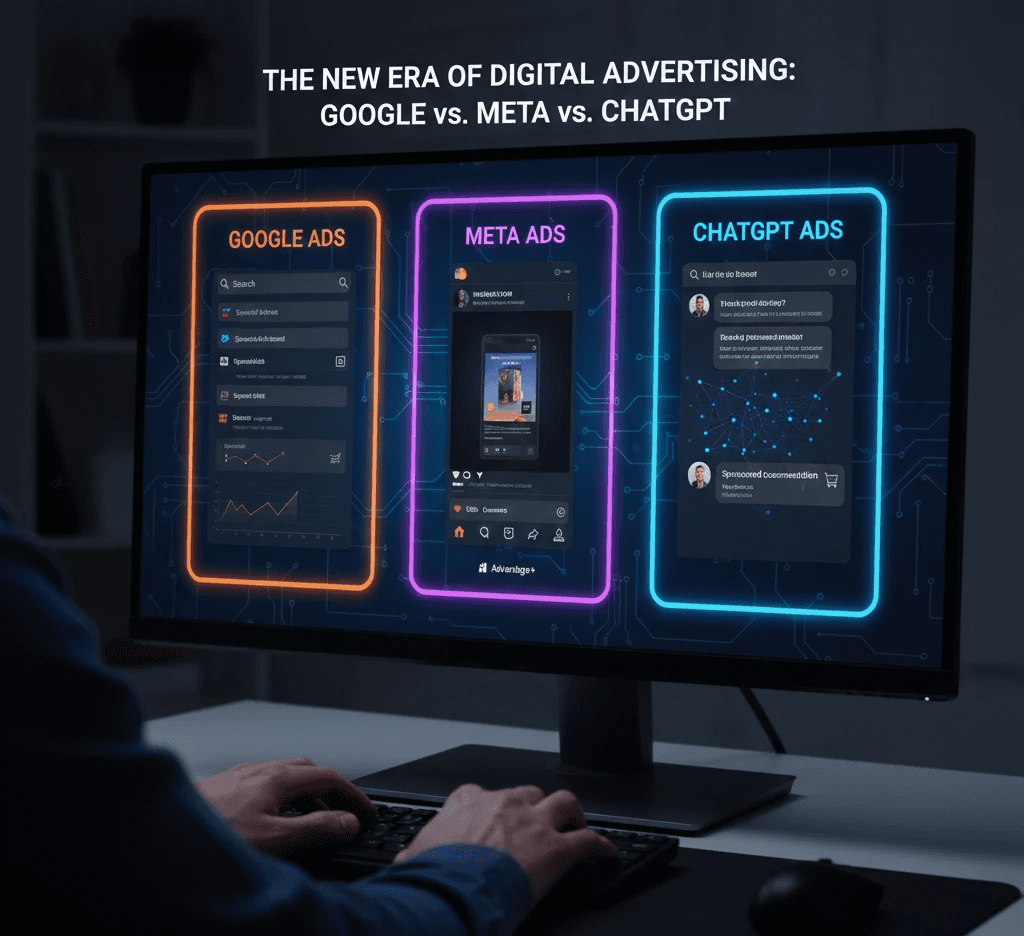
The digital advertising ecosystem has officially entered its most disruptive phase. For over a decade, the duopoly of Google Ads and Meta Ads dictated how brands reached their audiences. However, the commercial launch of ChatGPT Ads (Conversational Advertising) has introduced a third pillar that fundamentally challenges the status quo.
For growth marketers and performance specialists, choosing where to allocate budget is no longer just about "search vs. social." It is now about Intent vs. Interest vs. Conversation.
1. Google Ads: The King of High-Intent Search
Google Ads remains the global standard for capturing users at the very moment they are looking for a solution. Its primary strength is intent.
How it Works: Users type a query, and Google provides a list of sponsored links.
The Advantage: It targets the bottom of the funnel. When someone searches for "best CRM software," they are ready to evaluate or buy.
The 2026 Shift: With the integration of AI Overviews, Google is trying to blend its traditional search ads with generative answers. However, it still feels like an "interruption" to the user’s research process.
2. Meta Ads: The Master of Visual Discovery and Interest
If Google owns the "Search," Meta (Facebook, Instagram, WhatsApp) owns the "Discovery." Meta’s algorithm is unparalleled at finding customers who didn't even know they wanted a product.
How it Works: It uses deep behavioral data to show visually compelling ads in feeds and stories based on interests, demographics, and lookalike audiences.
The Advantage: It is the best platform for brand awareness and impulse purchases. It creates demand rather than just fulfilling it.
The 2026 Shift: Meta has heavily pivoted toward Advantage+ (AI-driven targeting), making it easier for advertisers to let the machine find the right buyer without manual audience building.
3. ChatGPT Ads: The New Frontier of Conversational Trust
The arrival of ads within ChatGPT (and other LLMs like Perplexity) represents the birth of Native Conversational Advertising. This is not a banner or a link; it is a recommendation within a dialogue.
How it Works: Instead of a list of links, the AI provides a synthesized answer and includes "Sponsored Citations."
The Advantage: It offers Contextual Trust. When ChatGPT says, "I recommend Brand X for your specific needs," it carries a level of authority that a paid search link cannot match.
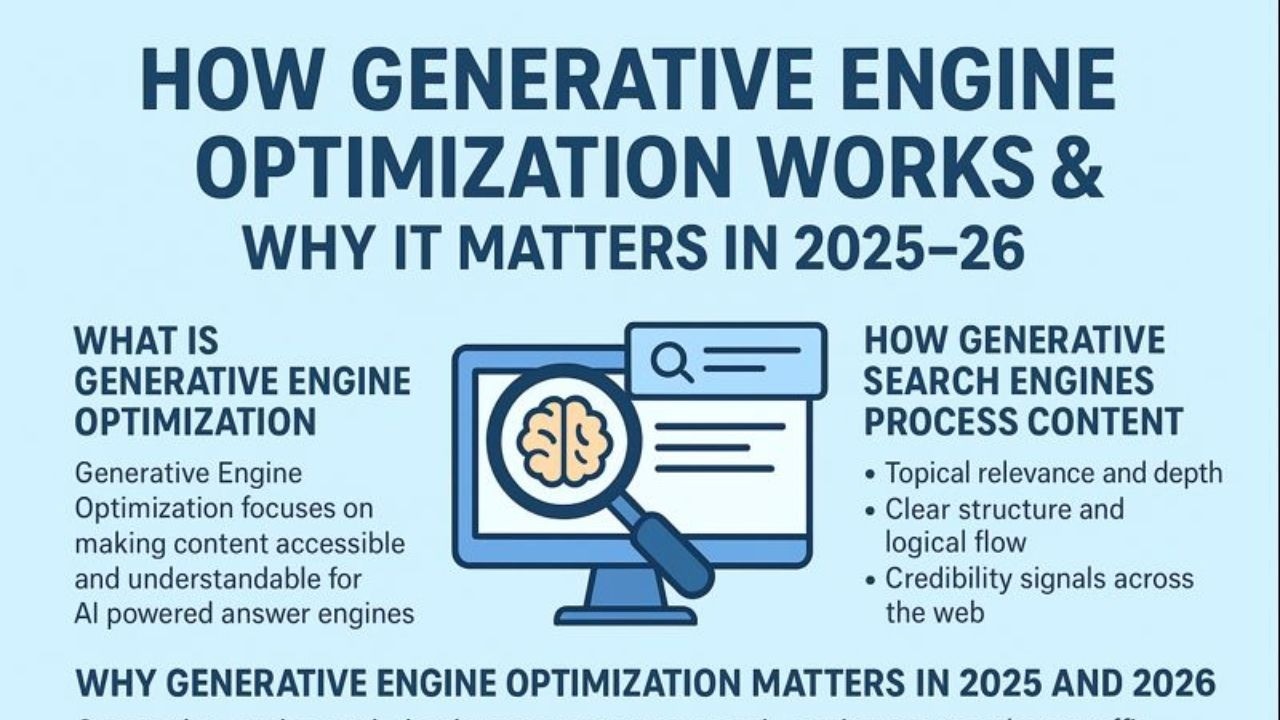
The 2026 Shift: ChatGPT Ads leverage Generative Engine Optimization (GEO). Brands that have optimized their organic AI visibility through tools like Geotoblog find that their paid ads perform significantly better because the AI already "trusts" their data.
Strategic Comparison Table
Feature | Google Ads | Meta Ads | ChatGPT Ads |
Primary Driver | Keyword Intent | User Interest/Behavior | Conversational Context |
Ad Format | Text, Shopping, Video | Visual (Images/Reels) | Sponsored Citations/Links |
User Mindset | "I am looking for..." | "Show me something new." | "Help me solve/decide..." |
Success Metric | Click-Through Rate (CTR) | Engagement & ROAS | Citation Share & Trust |
Best For | Direct Sales/Lead Gen | Brand Discovery/E-commerce | Expert Authority/Complex Sales |
4. Why ChatGPT Ads are Different: The Synergy with GEO
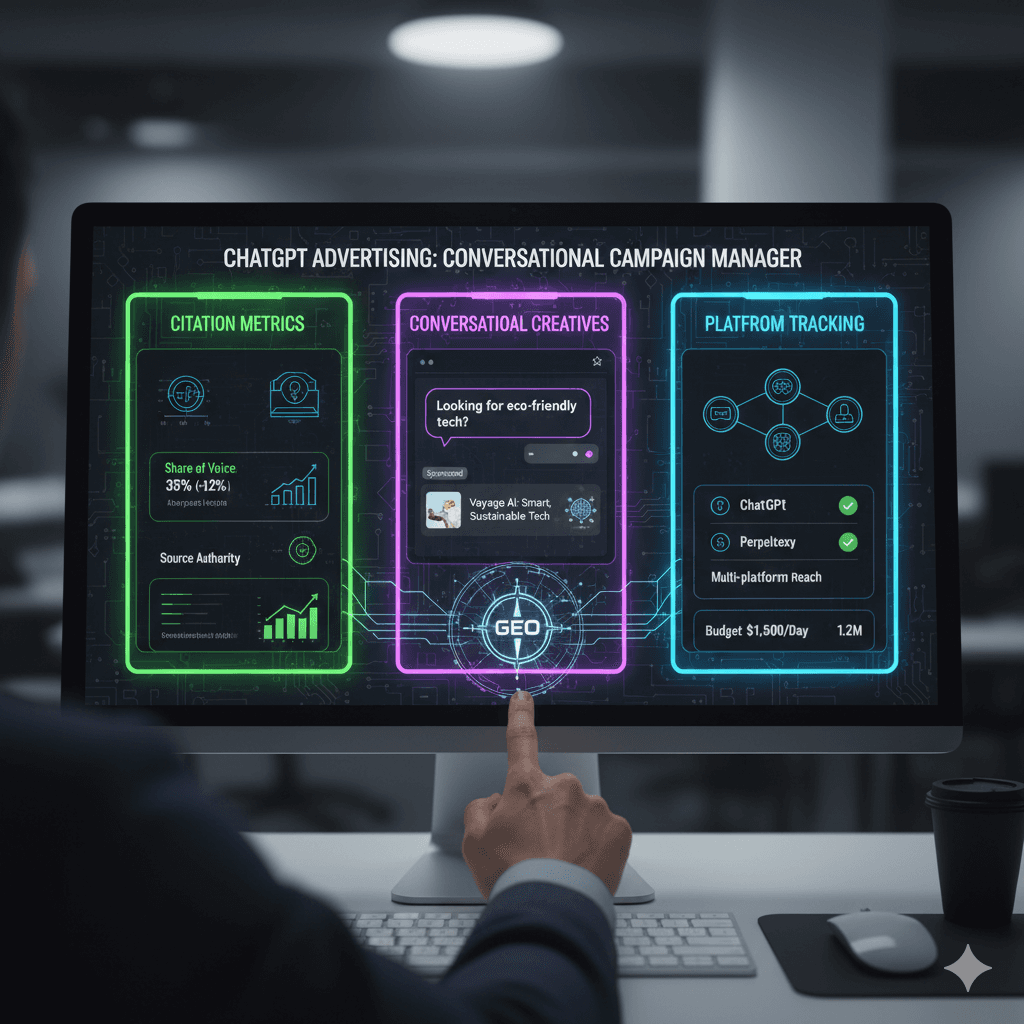
The most significant difference between ChatGPT and its predecessors is that ChatGPT Ads do not exist in a vacuum. To win here, you must master Generative Engine Optimization (GEO).
While you can pay for a Google rank, ChatGPT’s "recommendation" is influenced by the AI's entire training set. This is where LLM Visibility becomes crucial. Brands using AI search engine visibility tools to audit their organic citations find that their paid ChatGPT ads have a 3x higher conversion rate because the AI’s organic "opinion" of the brand aligns with the sponsored message.
5. How to Build a Cross-Platform Strategy in 2026
A modern performance marketing stack should not choose one, but rather balance all three:
Use Google Ads for high-volume, transactional keywords where the user wants an immediate link to buy.
Use Meta Ads to scale your brand to new audiences who aren't searching for you yet but fit your ideal customer profile.
Use ChatGPT Ads to dominate the "Evaluation Phase." When a user is asking an AI for advice or comparisons, your brand needs to be the one the AI recommends.
Conclusion
The winner of the "Ads War" isn't a single platform; it's the advertiser who knows how to use them together. Google captures the searcher, Meta finds the dreamer, and ChatGPT convinces the decider.
As we move deeper into 2026, the brands that invest in GEO and Conversational Ads early will be the ones that own the "Share of Voice" in the AI-driven world. The era of just "being seen" is over—the era of "being recommended" has begun.