Introduction
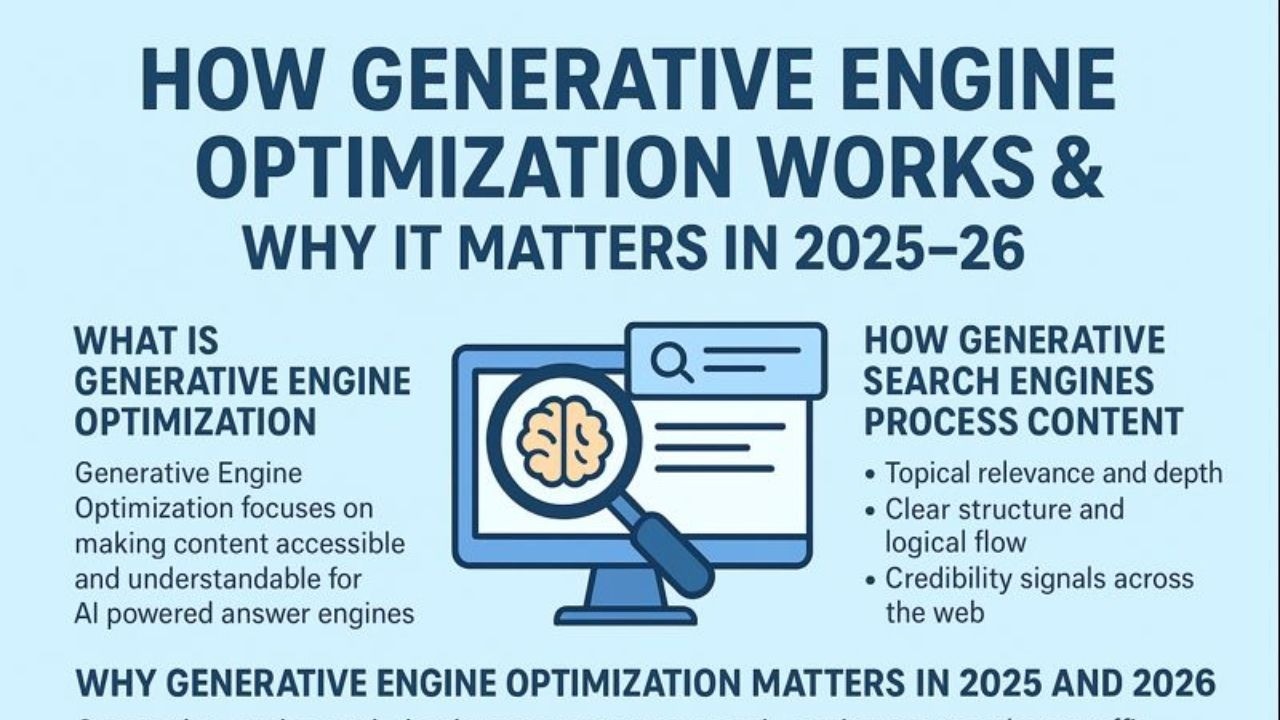
As we enter 2026, the digital marketing world has undergone a seismic shift. Traditional SEO is now inseparable from Generative Engine Optimization (GEO). If your brand isn't appearing in the personalized responses of ChatGPT, Claude, and Perplexity, you are practically invisible to a new generation of users.
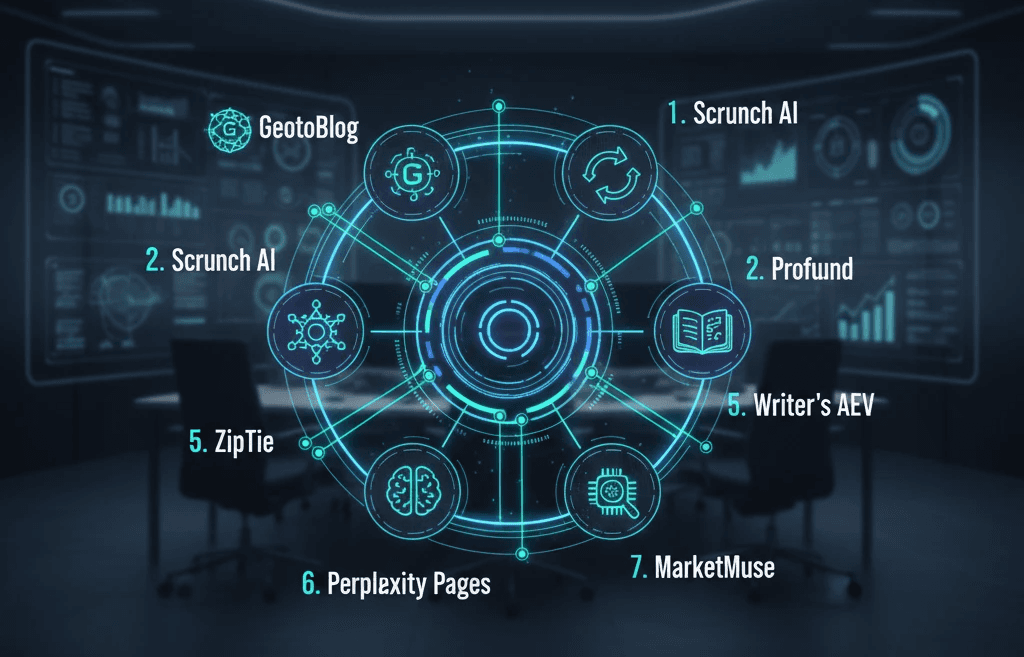
To help you navigate this transition, we’ve tested and ranked the best generative engine optimization tools currently dominating the market. Whether you need deep analytics or actionable content fixes, these are the tools you need to stay ahead.
1. GeotoBlog: The Actionable GEO Leader
While most tools focus on telling you where you are, GeotoBlog focuses on how to win. It is specifically designed for growth marketers who need to turn AI insights into content reality.
Best For: Content-driven GEO and WordPress optimization.
Key Feature: Native LLM analysis that provides specific sentence-level fixes to increase your citation probability in AI answers.
2. Scrunch AI: The Visibility Dashboard
Scrunch AI remains a powerhouse for monitoring your overall "Share of Voice" across major AI models.
Best For: Brand monitoring and competitive benchmarking.
Key Feature: A high-level dashboard that tracks how often your brand is mentioned across multiple Large Language Models (LLMs).
3. Profound: Enterprise AI Research
For large-scale operations, Profound offers deep-dive analytics that few can match.
Best For: Enterprise-level research and API-driven visibility data.
Key Feature: Advanced sentiment analysis and massive-scale prompt testing to see how AI perceives complex brand identities.
4. ZipTie: The Technical AEO Auditor
ZipTie bridges the gap between technical SEO and AI search. It’s a surgical tool for those who want to fix the "crawling" aspect of AI.
Best For: Identifying technical content gaps that block AI models.
Key Feature: A detailed audit report that highlights structural issues preventing your site from being cited as a primary source.
5. Perplexity Pages: The Content Prototype Tool
While Perplexity is a search engine, its "Pages" feature has become a vital tool for GEO testing.
Best For: Testing how AI clusters information and generates source citations.
Key Feature: Direct feedback on how information is synthesized, allowing you to reverse-engineer your content strategy.
6. Writer’s AEV (AI Evidence Visualizer)
A newer entrant in 2026, Writer’s AEV helps you see which parts of your text are most likely to be used as "evidence" by generative engines.
Best For: Ensuring your content provides the "factual density" AI models look for.
Key Feature: Heatmaps showing the citation-potential of your paragraphs.
7. MarketMuse AI Search Audit
MarketMuse has evolved its semantic platform to include a dedicated AI Search module.
Best For: Content planning and topical authority mapping for AEO.
Key Feature: Competitor gap analysis that identifies topics AI models find lacking in your current content.
Comparison Table: Best GEO Tools for 2026
Tool | Primary Focus | Ideal For | Difficulty |
GeotoBlog | Growth & Optimization | Content Marketers | Easy |
Scrunch AI | Brand Awareness | Agencies | Easy |
Profound | Data Research | Enterprises | Hard |
ZipTie | Technical Audit | SEO Experts | Moderate |
How to Choose the Right GEO Tool
Selecting the best generative engine optimization tools depends on your specific goals:
If you need to scale content: Go with GeotoBlog.
If you need to report to clients: Choose Scrunch AI.
If you are fixing technical debt: Use ZipTie.
Harika bir liste içeriği (listicle) fırsatı. Bu tür makaleler, "en iyiler" listesinde yer almak isteyen kullanıcılar için harika birer rehberdir ve Google’ın "Featured Snippets" (sıra sıfır) kısmında yer alma şansı çok yüksektir.
geotoblog.com için tüm SEO metriklerine ve 2026 trendlerine uygun makaleniz aşağıdadır:
Frequently Asked Questions (FAQ)
What is the most important metric in GEO?
In 2026, the most critical metric is Citation Probability—the likelihood that an LLM will name your brand as a source for its answer.
Can I do GEO without paid tools?
You can manually prompt AI models, but scale is impossible without dedicated GEO software that automates tracking and provides competitive data.
Is GEO different from AEO?
AEO (Answer Engine Optimization) is the goal; GEO (Generative Engine Optimization) is the set of tactics used to achieve that goal.

Conclusion
The GEO First Mindset
The tools listed above represent the cutting edge of AI search engine optimization. However, a tool is only as good as the strategy behind it. At GeotoBlog, we help you bridge the gap between analytics and real-world ranking results.
Don't wait for your competitors to take the lead. Start your journey into the future of search today at GeotoBlog.com.